

June 10, 2026
Online
On June 10, 2026, the Webinar on Unpacking the EU CBAM’s Implications for China was held. The Webinar was jointly organized by the ENTICE Project under Horizon Europe and the EU-CHINA BRIDGE Project, with support from the RENEW-Industry Network. Researchers, policy experts and industry representatives from Europe and China exchanged views and discussions on the impacts of the formal implementation of CBAM on China’s economy, industries and climate policies.
对中国的影响解读.png)
On June 10, 2026, the webinar “Unpacking the EU Carbon Border Adjustment Mechanism (CBAM)’s Implications for China,” jointly organized by the ENTICE Project under Horizon Europe and the EU-CHINA BRIDGE Project, with support from the RENEW-Industry Network, was successfully held online. Researchers, policy experts, and industry representatives from Europe and China exchanged views on the implications of the formal implementation of the CBAM for China’s economy, industries, and climate policies. Liu Xueye, Director of the Green Economy Policy Program and Senior Analyst at the Institute for Global Decarbonization Progress (iGDP), was invited to attend the webinar and deliver a thematic presentation.
In January 2026, the EU Carbon Border Adjustment Mechanism (CBAM) entered its definitive regime, and its implications for global trade patterns and industrial competitiveness have attracted widespread attention. The webinar focused on the potential impacts of the CBAM on the global economy, particularly China’s export competitiveness, industrial transformation, and international trade relations, as well as possible policy responses by different countries and opportunities for the development of green industries.
During the webinar, Dr. Maro Baka from the think tank E3-Modelling and Dr. Chun Xia-Bauer from the Wuppertal Institute delivered a joint presentation titled Introduction to the ENTICE and EU-CHINA BRIDGE Projects. The speakers introduced the objectives and activities of the two Horizon Europe projects, highlighting their complementary work in trade, climate, industrial decarbonization, model development, and international cooperation.
Shen Xinyi from the Centre for Research on Energy and Clean Air (CREA) delivered a presentation titled Overview of China’s Industrial Development. She provided an overview of the latest developments and decarbonization efforts in China’s industrial sector and outlined key trends in China’s transition toward a low-carbon economy. During the Q&A session, she emphasized that the core purposes of the CBAM are to protect the EU Emissions Trading System (ETS), reduce carbon leakage, and create a level playing field between EU products and imports, rather than to serve as a development instrument. Its fairness should therefore not be reflected solely in the reduction or exemption of obligations, but also in promoting access to technology, strengthening carbon accounting capacity, facilitating green investment, and supporting industrial transformation.
Dr. Paola Rocchi from the Euro-Mediterranean Center on Climate Change (CMCC) delivered a presentation titled Carbon Pricing Border Expansion and the EU CBAM: Insights from China and India, interpreting the implications of the expansion of carbon pricing mechanisms and the evolution of the CBAM for the competitiveness, trade patterns, and climate policy design of major emerging economies such as China and India. During the Q&A session, she added that existing computable general equilibrium (CGE) models generally operate at the national level and fail to account for regional and technological heterogeneity across China’s steel industry, making it difficult to effectively capture strategic adjustment behaviors by exporting countries, such as resource shuffling.
Zoi Vrontisi from E3-Modelling delivered a presentation titled Structural and Economic Impacts of the EU CBAM and Its Potential Expansion. She analyzed the structural and economic impacts of the current CBAM and its potential future expansion, noting that broader sectoral coverage and more stringent carbon accounting requirements would reshape production and trade in major economies. During the Q&A session, she noted that countries’ competitiveness would experience varying degrees of fluctuation under NDC/LTS scenarios. In quantitative modeling, Bulgaria was significantly affected mainly because of a decline in exports from downstream industries, while lower emissions from the transport sector generated an indirect offsetting effect, resulting in an overall balance in its total emissions.
Dr. Marc Vielle from the École polytechnique fédérale de Lausanne (EPFL) delivered a presentation titled From Trade Frictions to Cooperation: China’s Strategic Options in Response to the EU CBAM. Based on model-based research on steel and aluminum production, he assessed different response strategies available to China, including trade measures, domestic carbon pricing, and investment in renewable electricity, and pointed out that climate policies and industrial transformation measures have the potential to address the challenges posed by the CBAM. During the Q&A session, he noted that the adoption of CBAMs and carbon pricing by multiple countries could lead to regulatory fragmentation and high compliance costs. He recommended pursuing multilateral coordination through the WTO and UNFCCC to promote the gradual convergence of global carbon pricing frameworks.
Professor Wang Pu from the Chinese Academy of Sciences delivered a presentation titled The Impact of CBAM on International Trade and Response Strategies from the Perspectives of Economic and Environmental Fairness. The presentation examined the impacts of carbon border adjustment mechanisms on international trade competitiveness and carbon-related economic inequality and explored policy responses such as domestic carbon pricing and trade diversification, raising broader questions concerning fairness and responsibility within global value chains. During the Q&A session, he explicitly pointed out that under the current rules, requiring processing-exporting countries to bear full carbon responsibility for imported precursor materials is unfair. He recommended drawing on the duty exemption provisions for inward processing under Article 256 of the Union Customs Code, allowing developing countries to report emissions from imported precursor materials separately from emissions generated by domestic processing and, subject to traceability and third-party verification requirements, to fulfill CBAM certificate obligations only for emissions from domestic processing.
Liu Xueye, Director of the Green Economy Policy Program and Senior Analyst at the Institute for Global Decarbonization Progress (iGDP), delivered a presentation titled Quantitative Assessment of the Long-Term Interaction between the EU CBAM and China’s Steel Industry. The study uses the independently developed CBAM-China Steel Transition model to systematically analyze the long-term interaction between the EU CBAM and China’s steel industry. It emphasizes the critical importance of the EU carbon price, the development of China’s Emissions Trading System (ETS), and the pace of industrial decarbonization in China’s steel industry in determining future outcomes.
During the Q&A session, in response to the question of how to enhance the fairness of the CBAM for developing countries in practice, Liu Xueye, drawing on her continued tracking of EU policies and model-based analysis, proposed three detailed recommendations for policy optimization:
First, correct biases in default emission values. Although the current mechanism establishes default carbon intensity values for different production routes, these country-specific default values do not accurately reflect the actual technological levels and carbon intensities of developing countries. The EU should build on existing research by the Joint Research Centre (JRC), broadly incorporate evidence from the latest scientific literature, and actively communicate with the governments of exporting countries to jointly develop a fair and dynamic system of default values for product carbon intensity. This would help avoid unfair trade pressure on enterprises in different producing countries, particularly small and medium-sized enterprises (SMEs), resulting from costly and overburdened verification resources.
Second, establish direct equivalence recognition of carbon prices through multilateral intergovernmental mutual recognition agreements. The EU should adjust its approach to directly recognize compliance instruments from exporting countries’ carbon markets, such as compliance certificates from China’s national ETS, fully recognize the actual carbon costs already paid in developing countries, and eliminate costly and duplicative secondary verification by EU-recognized institutions.
Third, introduce a cross-period retrospective deduction window to provide temporal flexibility. In response to institutional frictions caused by mismatches between China’s carbon market compliance schedule and the EU reporting cycle, the mechanism should incorporate greater temporal flexibility by introducing a 24- to 36-month deferred settlement or ex-post retrospective deduction window. This would allow enterprises to make advance payments based on default values before the compliance cycle in the country of production is completed and subsequently apply for refunds or deductions of CBAM certificates based on official compliance certificates, ensuring the scientific integrity of carbon cost deductions.
The Institute for Global Decarbonization Progress (iGDP) has long focused on policies related to the green economy and green trade, as well as their implications for relevant industries and corresponding response strategies. In April this year, iGDP released the report EU Carbon Border Adjustment Mechanism (CBAM): Policy Developments and Outlook. Based on a systematic review of EU regulations, technical documents, and major research findings, the report identified three key issues with the most substantive implications for China and conducted forward-looking analysis. On March 20 this year, the iGDP team and its collaborators published a research paper titled Quantifying the Long-Term Impact of Carbon Border Adjustment Mechanism on Chinese Steel Industry in iScience, a flagship interdisciplinary journal published by Cell Press. The study systematically developed a process-level, scenario-based integrated CBAM-CST assessment model to quantitatively simulate the long-term cost impacts of the EU CBAM on China’s steel industry through 2050. In July 2025, iGDP released the report Development of a Modeling Framework for Analyzing the Interaction between the EU Carbon Border Adjustment Mechanism (CBAM) and Low-Carbon Transition in China’s Steel Industry. Focusing on the long-term implications of the CBAM for China-EU trade and climate cooperation, the report uses the steel industry as a case study to develop a quantitative analytical model for assessing medium- and long-term trends in adjustment costs for Chinese exports, providing a reference for policymaking and industrial responses.
-
 Under the Heat Dome: When Extreme Heat Becomes the Summer Norm — Climate Catalyst Seminar on Enhancing Urban Heat ResiliencePast event AUG 2026
 -
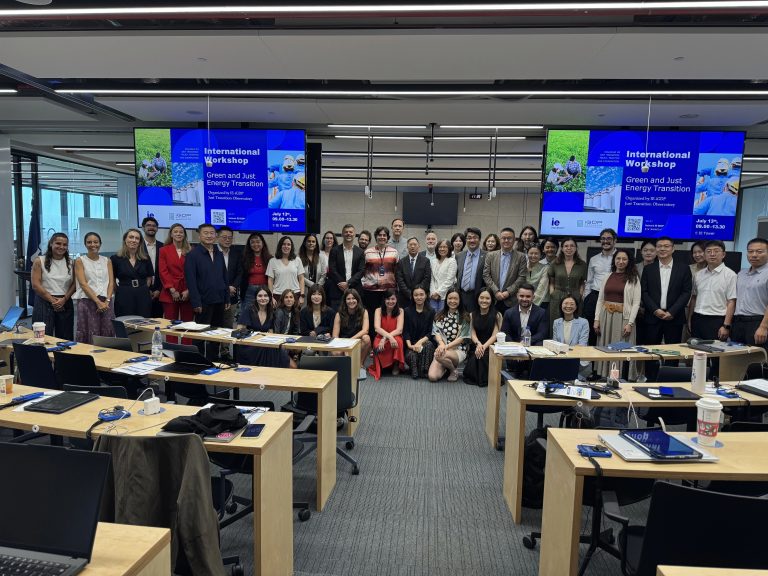 International Seminar on Green and Just Energy TransitionPast event JUL 2026
 -
 Seminar on Green Power Integration in Emerging Use CasesPast event JUN 2026
 -
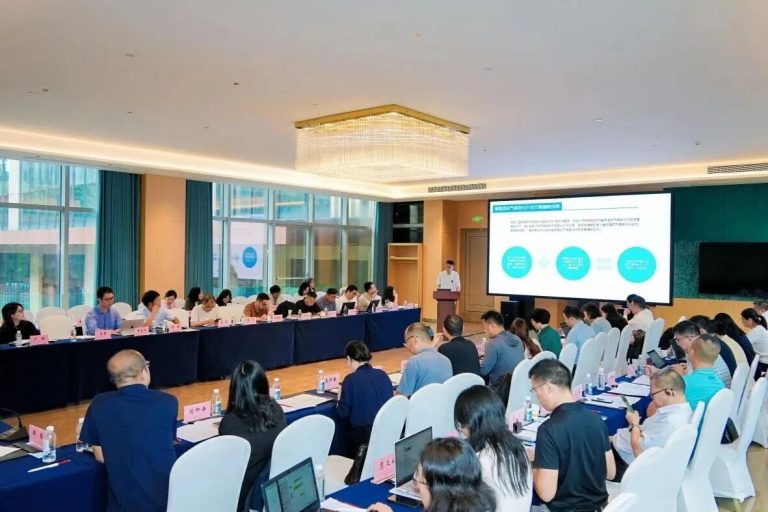 “Climate Action Local Capacity Building” Project — Seminar on Low-Carbon Collaborative Development and Climate-Resilient City Building in the Chengdu–Chongqing Economic CirclePast event JUN 2026


