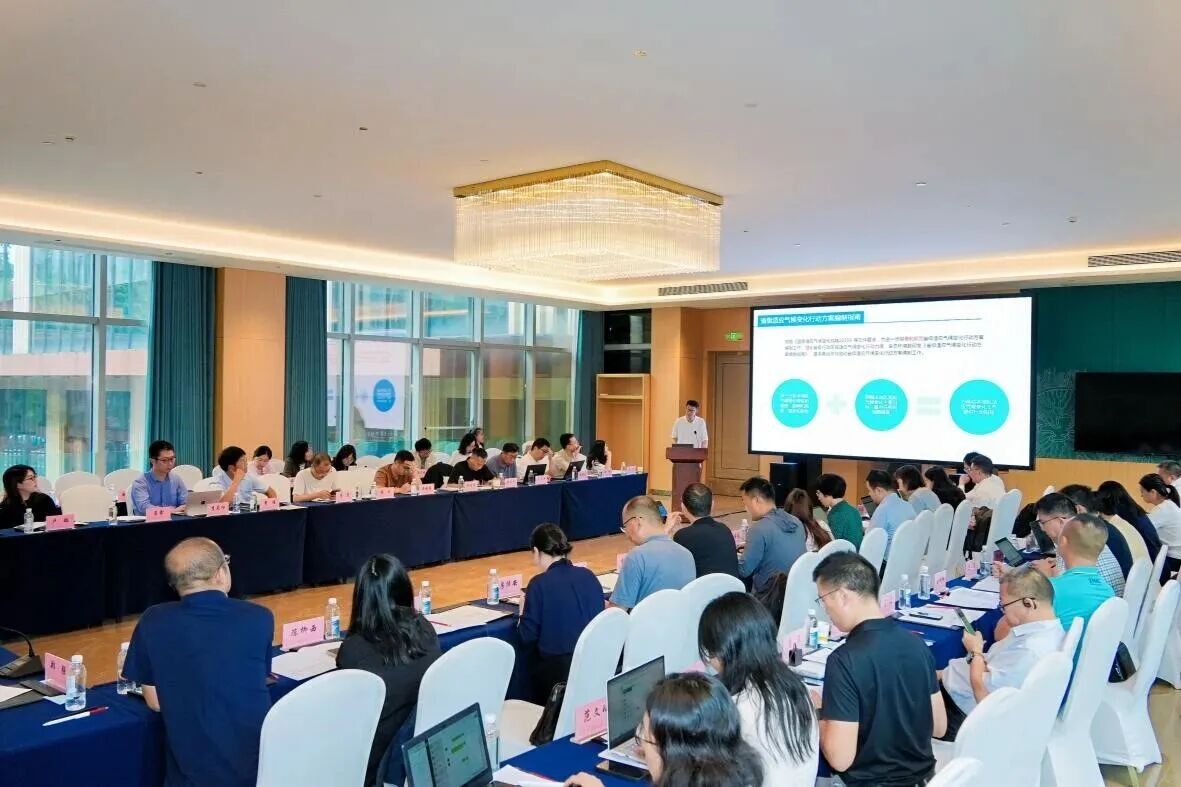
From June 24 to 25, 2026, the “Climate Action Local Capacity Building” Project under the Zhenhua Green Transition and Sustainable Development Fund hosted the Seminar on Low-Carbon Collaborative Development and Climate-Resilient City Building in the Chengdu–Chongqing Economic Circle in Chongqing. The seminar was guided by the China Environmental Protection Foundation and the Institute for Global Decarbonization Progress (iGDP), organized by the National Center for Climate Change Strategy and International Cooperation (NCSC), and undertaken by Chongqing Carbon Manager Technology Co., Ltd. Focusing on coordinated green and low-carbon development and climate-resilient city building in the Chengdu–Chongqing Economic Circle in Southwest China, the seminar brought together representatives from government departments, research institutions, industry and enterprises, and social organizations. Through a combination of field visits and thematic discussions, participants shared leading practices, explored solutions to challenges in coordinated development, and strengthened climate resilience, with the aim of developing replicable and scalable models for low-carbon transformation and climate-resilient development in mountainous cities across China.
Xu Guang, Chairman of the China Environmental Protection Foundation; Wang Zhengang, Deputy Secretary-General of the Foundation; Xu Huaqing, former Director of the NCSC; representatives from the Department of Ecology and Environment of Sichuan Province, Chongqing Municipal Bureau of Ecology and Environment, Chongqing Climate Change Development Center (Chongqing Resources and Environment Exchange Center), and Sichuan Academy of Environmental Policy Research and Planning; officials from relevant departments in the Chengdu–Chongqing region and other southwestern provinces; representatives of major industrial energy-consuming enterprises; and experts from technical institutions and university think tanks specializing in low-carbon development and climate adaptation attended the seminar.
In his opening remarks, Wang Zhengang, Deputy Secretary-General of the China Environmental Protection Foundation, noted that as a flagship initiative of the Zhenhua Fund in forward-looking climate action, the “Climate Action Local Capacity Building” Project has remained aligned with China’s national strategy of achieving carbon peaking and carbon neutrality while fully respecting local development conditions since its launch. The project has visited Hangzhou, Changchun, Hainan, Guiyang, Nanjing, Guangzhou, and other locations, conducting extensive field research and discussions. It has successfully established a regional climate action platform that facilitates coordination between central and local governments and collaboration among diverse stakeholders, providing practical models that can be referenced and replicated to strengthen climate governance capacity in different regions.
Xu Huaqing, former Director of the NCSC, noted in his remarks that China’s efforts to achieve carbon peaking and carbon neutrality have entered a critical stage in which carbon reduction is the strategic priority, with equal emphasis placed on mitigation and adaptation. As the primary arena for climate action, cities’ progress in low-carbon transformation and climate adaptation directly affects the achievement of the carbon peaking and carbon neutrality goals as well as the safety and resilience of urban and rural development. Located in the hinterland of Southwest China, the Chengdu–Chongqing region serves both as an ecological barrier in the upper reaches of the Yangtze River and as a strategic pillar for coordinated regional development in China. Promoting coordinated development between Chengdu and Chongqing in low-carbon transformation and climate adaptation is therefore not only essential to implementing major national strategies but also an important practical endeavor for exploring pathways toward green and low-carbon development of urban agglomerations.
During the session on local partners’ climate action initiatives, representatives from relevant organizations in the Chengdu–Chongqing region introduced their practical explorations in green and low-carbon transformation and climate-resilient development in their respective regions and fields. A representative of Chongqing Carbon Manager Technology Co., Ltd. shared the progress of Chongqing’s climate action and the achievements of its digital energy and carbon management practices. A representative of the Chongqing Climate Change Development Center (Chongqing Resources and Environment Exchange Center) provided an in-depth analysis of the achievements of five years of reform and development of Chongqing’s carbon market and highlighted the key role of carbon pricing mechanisms in guiding enterprises toward low-carbon transformation. A representative of the Sichuan Academy of Environmental Policy Research and Planning introduced the overall approach and practical experience of supporting Sichuan’s climate change response through the development of low-carbon think tanks. A representative of the Chongqing Renewable Energy Society shared practical approaches and future prospects for cross-border green collaboration in the context of international cooperation on low-carbon technologies. A representative of the Chongqing Climate Center delivered a thematic presentation on the exploration and practice of transforming climate resources into economic value.
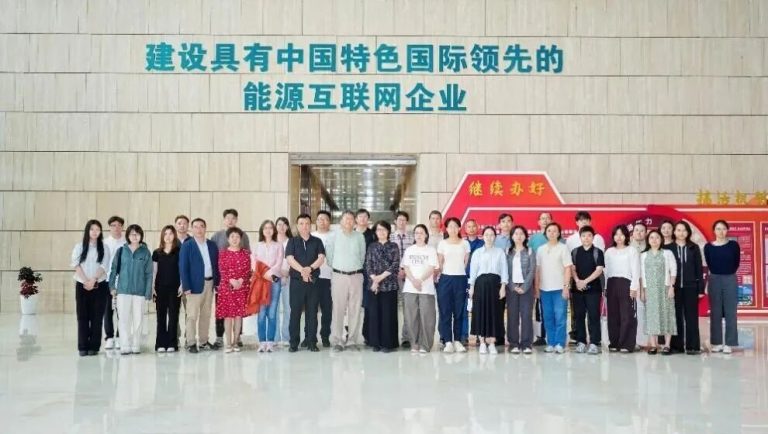
During the seminar, participants also conducted field visits to Chongqing Carbon Manager Technology Co., Ltd., the Jiangbeizui Water-Source Heat Pump Project, and Chongqing Jiangbeizui Riverside Park. They gained an in-depth understanding of the development and application of the “Dual-Carbon Digital Smart Cloud Platform” and observed the application of digital technologies in areas including full-process carbon emissions management, integrated carbon asset management, and intelligent climate risk assessment. At the Jiangbeizui Water-Source Heat Pump Project, participants held in-depth discussions with project managers and technical personnel on large-scale clean energy applications and technology deployment in mountainous cities. At Jiangbeizui Riverside Park, participants conducted an on-site inspection of Chongqing’s demonstration project for ecological restoration and climate adaptation along the “Two Banks and Four Rivers,” gaining a deeper understanding of practical approaches to enhancing flood prevention and drainage capacity, ecosystem services, and climate resilience in urban waterfront spaces. During the field visits, participants exchanged views extensively with corporate technical personnel on challenges related to low-carbon retrofits, technology deployment, and the scaling-up of successful models, and explored pathways for integrating technological innovation with industrial development.
The seminar systematically summarized advanced experiences and practical achievements in coordinated low-carbon development and climate-resilient city building in the Chengdu–Chongqing region and generated a series of targeted and actionable consensus recommendations. In addition, the NCSC is currently collecting outstanding practical cases from partners in the fields of low-carbon transformation and climate adaptation. The seminar generated preliminary results for this case collection, which will subsequently be systematically reviewed and distilled to identify replicable and scalable experience and models, providing demonstration and reference for local climate action capacity building nationwide.
Going forward, the “Climate Action Local Capacity Building” Project under the Zhenhua Green Transition and Sustainable Development Fund of the China Environmental Protection Foundation will further deepen regional exchanges and cooperation, build consensus and promote coordinated action, and advance tangible progress in green and low-carbon transformation and climate adaptation capacity building in key regions. These efforts will contribute further to China’s achievement of its carbon peaking and carbon neutrality goals and the development of a Beautiful China.


 “Climate Action Local Capacity Building” Project — Seminar on Industrial Low-Carbon Transformation and Near-Zero Carbon DevelopmentPast event MAY 2026
 Seminar on “Accelerating the Development of Corporate Carbon Emission Management Systems: From Carbon Dual-Control Policies to Implementation Pathways”Past event JAN 2026

