

January 27, 2026
Guangzhou
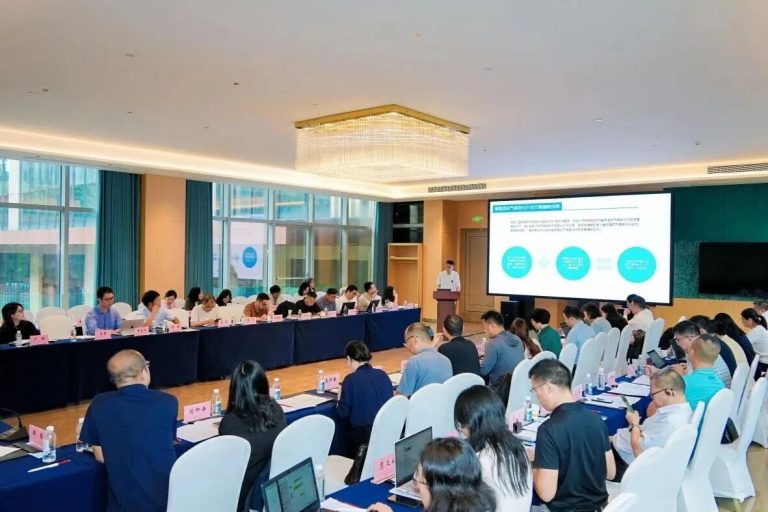
The Guangdong Low-Carbon Development Promotion Association, together with the Guangzhou Institute of Energy Conversion, Chinese Academy of Sciences and other organizations, successfully held the seminar “Accelerating the Development of Corporate Carbon Emission Management Systems: From Carbon Dual-Control Policies to Implementation Pathways” on the afternoon of January 27. The seminar provided thematic training on multiple key topics.

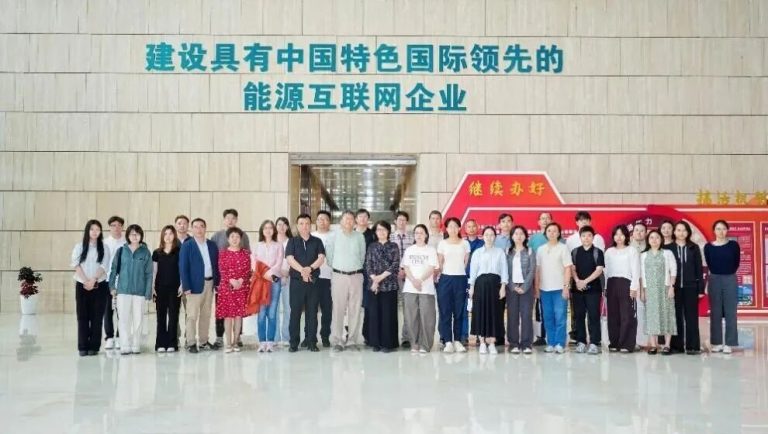
To implement the national strategy on carbon peaking and carbon neutrality, respond to the requirements of the Work Plan for Accelerating the Development of a Dual-Control System for Carbon Emissions, and promote the comprehensive transition from dual control of energy consumption to dual control of carbon emissions, the Guangdong Low-Carbon Development Promotion Association, together with the Guangzhou Institute of Energy Conversion, Chinese Academy of Sciences and other organizations, successfully held the seminar “Accelerating the Development of Corporate Carbon Emission Management Systems: From Carbon Dual-Control Policies to Implementation Pathways” on the afternoon of January 27. The seminar provided thematic training on key topics including carbon dual-control policies, the expansion of the carbon market, the development of corporate carbon management systems, zero-carbon park development, industrial carbon reduction technologies, and product carbon footprints. Before the seminar, participants also visited the New Energy Technology Exhibition Hall of the Guangzhou Institute of Energy Conversion, Chinese Academy of Sciences. The seminar attracted representatives from more than 100 enterprises across Guangdong Province and was one of a series of activities organized under the Guangdong Climate Action Cooperation Center for 2035, jointly established by the Institute for Global Decarbonization Progress (iGDP) and the Guangdong Low-Carbon Development Promotion Association.
01 Opening Remarks
Xia Jianjun, Deputy Director of the Department of Science and Technology of the Guangzhou Institute of Energy Conversion, Chinese Academy of Sciences, delivered the opening remarks. He noted that the 15th Five-Year Plan period will be a critical period for achieving the carbon peaking target, and that the carbon dual-control system will serve as an important policy instrument for the green transition. The seminar brought together expertise from across the sector to support the implementation of carbon dual-control policies. As a national energy science and technology institution, the Guangzhou Institute of Energy Conversion will continue to deepen industry–university–research collaboration, translate scientific research achievements related to carbon peaking and carbon neutrality into practical services for the energy transition, and lay a solid foundation for achieving the “dual carbon” goals.
02 Thematic Presentations
Yu Wenyi, Secretary-General of the Guangdong Energy Research Association, provided a systematic overview of the development of corporate carbon emission management systems under carbon dual-control policies. He noted that during the 15th Five-Year Plan period, China will implement a carbon dual-control system centered on carbon intensity control, supplemented by total carbon emissions control, using it as a key lever to achieve the carbon peaking target. Corporate carbon management systems therefore urgently need to undergo transformation and upgrading. “Intensity control” requires enterprises to take carbon emission intensity into account while making reasonable production arrangements, meaning that carbon efficiency is becoming a core component of corporate competitiveness alongside energy efficiency. He therefore recommended that enterprises adopt a systems approach to developing carbon management systems by strengthening the foundation for carbon accounting, promoting product carbon labeling, enhancing professional carbon market management capabilities, and actively utilizing policy support such as green electricity procurement, zero-carbon park development, and carbon finance instruments. In doing so, enterprises can align with the national “dual carbon” strategy and regional industrial transformation while achieving sustainable and high-quality development.
Zeng Xuelan, Executive Dean of the Collaborative Innovation Institute for Carbon Neutrality and Green Development at Guangdong University of Technology, systematically reviewed the underlying logic and development pathways of the national carbon market policy framework and Guangdong's pilot experience. At present, China's national carbon market system is steadily improving, with sectoral coverage expanding in an orderly manner to include power generation, steel, cement, and aluminum smelting. The allowance allocation mechanism is becoming increasingly mature and gradually tightening, while data oversight continues to be strengthened, making the carbon market an important policy instrument for advancing the “dual carbon” goals. As one of China's more active regional pilot carbon markets, the Guangdong carbon market covers a broad range of sectors, including petrochemicals, papermaking, civil aviation, ceramics (construction and sanitary ceramics), transport (ports), data centers, steel (electric arc furnace steelmaking, rolling, and other processes), and cement (grinding). Going forward, Guangdong will further align its carbon market development with the national market, encourage enterprises to strengthen carbon asset management, and support green transformation and regional low-carbon development.
Yi Guogang, Dean of the Guangdong Nanhua Institute of Energy Efficiency and Low-Carbon Development, provided an in-depth interpretation of the new requirements for carbon emission assessment of fixed-asset investment projects. He noted that since 2025, the approval framework for fixed-asset investment projects has shifted from “dual control of energy consumption” toward “dual control of carbon emissions” through coordinated energy and carbon management, with carbon emission assessment becoming a mandatory constraint in project approval and being integrated throughout the energy conservation review process. Taking the new requirements under the Implementation Measures of Guangdong Province for Energy Conservation Review and Carbon Emission Assessment of Fixed-Asset Investment Projects (Draft for Solicitation of Comments) and corporate practices as examples, he analyzed key considerations for enterprises in project planning, process selection, carbon reduction measures, and digital energy and carbon management. He recommended that enterprises conduct preliminary carbon accounting at an early stage, strengthen carbon management across supply chains, and develop green energy-use systems to build low-carbon capabilities systematically and respond to new policy and market challenges.
Wang Peng, Researcher at the Guangzhou Institute of Energy Conversion, Chinese Academy of Sciences, provided a comprehensive analysis of the pathways and key technologies for zero-carbon parks, from planning and development to operational assessment. He noted that against the backdrop of the global energy transition, zero-carbon parks are an inevitable choice for industrial upgrading. During the 15th Five-Year Plan period, China will implement the carbon dual-control system, while policy and market forces are driving parks toward near-zero-carbon and ultimately zero-carbon development. Guangdong plans to develop a number of zero-carbon parks by 2030 and gradually establish sound systems for technologies and equipment, business models, and policy services. He analyzed differentiated implementation pathways for different types of parks in areas including renewable energy, low-carbon transport, green buildings, and ecological carbon sinks. He emphasized that integrated energy services should serve as the core for developing integrated energy systems that are demand-oriented, based on multi-energy integration, and enabled by smart coordination, thereby improving efficiency, reducing costs, and controlling emissions to help parks achieve zero-carbon targets.
He Junfei, Executive Vice Chairman and Secretary-General of the Guangdong Energy Conservation Engineering Technology Innovation Promotion Association, shared industrial energy conservation and carbon reduction technologies and implementation cases. He noted that industrial energy consumption accounts for 50%–70% of total energy consumption across society, with nearly half consisting of low- and medium-temperature heat demand, indicating substantial market potential for relevant technologies and services. He focused on three representative carbon reduction technologies and their applications. High-temperature heat pump technology can replace traditional boiler-based heating and has demonstrated significant energy-saving effects in sectors such as liquor production, textiles, and food processing, making it an important technological pathway toward carbon neutrality in industry. Novel small-temperature-difference steam regeneration technology uses low-grade waste heat to produce regenerated steam and has been applied in processes such as food steaming and liquor distillation, achieving average energy savings of more than 30%. Waste heat recovery technology for stenter machines uses heat exchangers to recover waste heat from textile industry exhaust gases, with a single piece of equipment saving more than RMB 500,000 in energy costs annually. These technologies provide practical solutions for enterprises seeking to conserve energy and reduce carbon emissions.
Cheng Yongbin, Deputy General Manager of Baiyun Electric Group Co., Ltd. and General Manager of the Baiyun Electric Incubator, shared the group's “five actions” for advancing carbon emission management in pursuit of the “dual carbon” goals. First, it has systematically conducted carbon inventories, completed China's first carbon metrology technology research and carbon footprint certification for an electrical product—a 40.5 kV gas-insulated metal-enclosed switchgear—and participated in the development of four carbon management standards. Second, it has optimized its energy mix by integrating photovoltaic and energy storage technologies to achieve zero-carbon operation of the Baiyun Electric Technology Building. Third, it has established a smart energy and carbon management platform, achieving annual energy savings and emission reductions of more than 20%, cost reductions of 30%, and a 50% improvement in operation and maintenance efficiency. Fourth, it has advanced energy-saving and carbon reduction upgrades by developing the Shenshan Intelligent Manufacturing Base for Power Distribution Equipment, increasing production efficiency by more than 50% and reducing product energy consumption by more than 20%. Fifth, it has strengthened carbon reduction through management systems by establishing a dedicated team and improving institutional and monitoring systems to ensure comprehensive compliance with emission requirements. Baiyun Electric has consistently upheld the principle of green development and established a full-process green production system, providing a practical example for low-carbon transformation in the sector.
Cheng Beibei, Secretary-General of the Guangdong Low-Carbon Development Promotion Association, noted that product carbon footprint management is becoming increasingly important for enterprises seeking to develop green supply chains and build new competitive advantages. She systematically reviewed domestic and international product carbon footprint standards and, in light of new international green trade rules such as the EU Carbon Border Adjustment Mechanism (CBAM) and the EU New Batteries Regulation, explained the urgency and long-term strategic value of corporate carbon footprint management. She also introduced Guangdong's pioneering practices in carbon footprint management, including progress in developing the Guangdong carbon labeling system, cooperation on mutual recognition of carbon labels between Guangdong and Hong Kong, and the Greater Bay Area Carbon Footprint Alliance. She emphasized that enterprises should place whole-life-cycle product management at the core and transform carbon management from a compliance requirement into a green competitive advantage through carbon footprint accounting, emission reduction target setting, application of carbon reduction technologies, and the development of green supply chains.
At the seminar, the Guangdong Low-Carbon Development Promotion Association released the report Research on Pathways for the Transition from Dual Control of Energy Consumption to Dual Control of Carbon Emissions: Exploration Based on National Strategies and Local Practices, one of a series of outputs developed under the “2035 Local Climate Action Platform” to advance green and low-carbon development in Guangdong. Drawing on the collective expertise of specialists and scholars in energy, economics, environment, and public policy, the report systematically reviews the evolution of carbon dual-control policies and local practices and examines the institutional foundations, theoretical framework, regional challenges, and implementation pathways, providing recommendations for advancing the transition to the new dual-control system.
-
 “Climate Action Local Capacity Building” Project — Seminar on Low-Carbon Collaborative Development and Climate-Resilient City Building in the Chengdu–Chongqing Economic CirclePast event JUN 2026
 -
 “Climate Action Local Capacity Building” Project — Seminar on Industrial Low-Carbon Transformation and Near-Zero Carbon DevelopmentPast event MAY 2026


