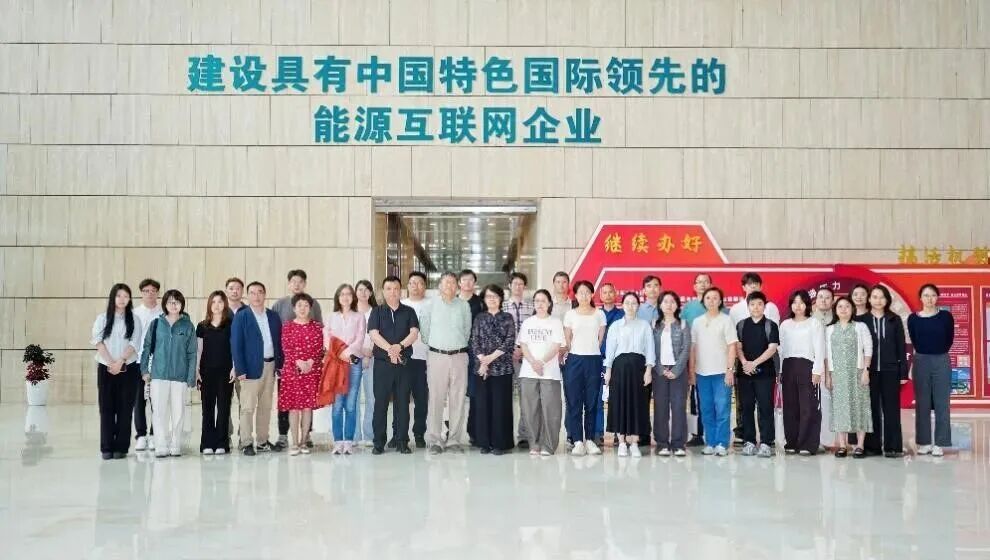
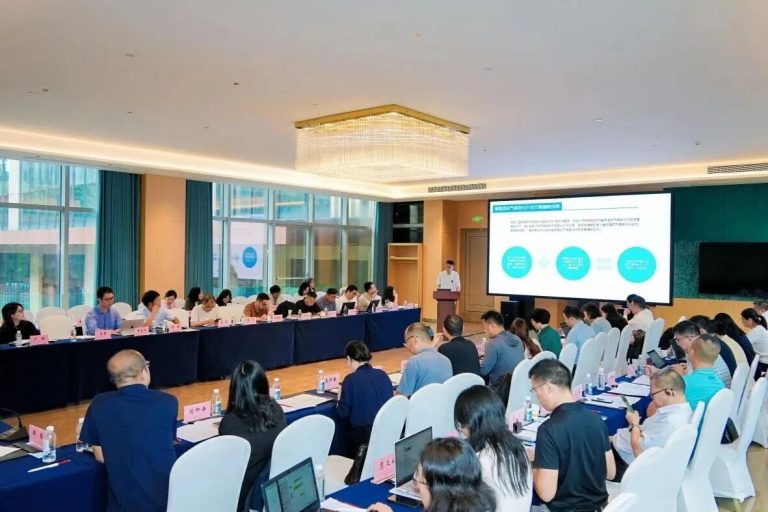
On May 20–21, 2026, the “Climate Action Local Capacity Building” Project of the Zhenhua Green Transition and Sustainable Development Fund—Seminar on Industrial Low-Carbon Transformation and Near-Zero Carbon Development—was successfully held in Nanjing, Jiangsu Province. The seminar was guided by the China Environmental Protection Foundation and the Institute for Global Decarbonization Progress (iGDP), organized by the National Center for Climate Change Strategy and International Cooperation (NCSC), and hosted by the Jiangsu Institute of Modern Low-Carbon Technology. Focusing on the green and low-carbon development of industries in the Yangtze River Delta region, the seminar brought together representatives from government departments, research institutions, enterprises, and social organizations. Through a combination of field visits and thematic discussions, participants shared leading practices, explored solutions to technological bottlenecks in the transition, and built consensus on regional cooperation, seeking to develop replicable and scalable models for industrial low-carbon transformation and near-zero carbon development across China.
Xu Guang, Chairman of the China Environmental Protection Foundation; Ding Ding, Deputy Director of the National Center for Climate Change Strategy and International Cooperation; Hu Min, Director of the Institute for Global Decarbonization Progress; and relevant leaders of Nanjing Jiangning Economic and Technological Development Zone attended the seminar and delivered opening remarks. Representatives of supporting organizations, including the Carbon Neutrality Professional Committee of the China Energy Research Society and the Jiangsu Research Center for Innovation and Economic Development, as well as officials from relevant departments in the Yangtze River Delta region, representatives of major industrial energy-consuming enterprises, experts from low-carbon technology research and development institutions, and scholars from universities and think tanks also attended the seminar.
In his opening remarks, Xu Guang, Chairman of the China Environmental Protection Foundation, noted that the “Climate Action Local Capacity Building” Project is an exploration by the Zhenhua Green Transition and Sustainable Development Fund at the local level. The project aims to help local governments enhance their climate governance capacity and explore pathways for industrial low-carbon transformation by integrating expert resources and establishing local platforms. The in-depth exchanges and discussions under the theme of “Industrial Low-Carbon Transformation and Near-Zero Carbon Development” represent an important step toward implementing China’s “dual carbon” strategy and strengthening local capacity for climate action.
Ding Ding, Deputy Director of the National Center for Climate Change Strategy and International Cooperation, noted in his opening remarks that China’s “dual carbon” efforts have entered a critical stage in which carbon reduction is the key focus. As major carriers of industrial development, industrial parks play a crucial role in achieving the “dual carbon” goals, and their progress in low-carbon transformation and near-zero carbon development directly affects the implementation of these goals.
During the local climate action partners’ sharing session, representatives from Zhejiang, Shanghai, Jiangsu, and other regions introduced their practices and explorations in green and low-carbon transformation. The Development and Planning Research Institute of Zhejiang Province shared its overall approach to coordinating industrial restructuring, optimizing the energy mix, and promoting technological innovation. The Shanghai Environment and Energy Exchange provided an in-depth interpretation of the key role of carbon trading and carbon pricing mechanisms in guiding enterprises toward low-carbon transformation. The Zhejiang Economic Information Center and Green Jiangnan Public Environmental Concern Center in Suzhou Industrial Park respectively shared practical experience in industrial carbon reduction in low-carbon parks and near-zero carbon development in industrial parks. Qingyue Environmental Information Technology Service Center in Minhang District, Shanghai, and Jilin Jitan Environmental Protection Development Group respectively introduced typical cases of green and low-carbon transformation in the steel industry and zero-carbon factory development.
During the expert policy interpretation session, a representative of the National Center for Climate Change Strategy and International Cooperation provided a systematic interpretation of the latest policy requirements and implementation pathways for achieving synergistic improvements in pollution and carbon reduction in the industrial sector. Relevant officials from the Jiangsu Provincial Department of Industry and Information Technology provided a detailed introduction to the recognition criteria and support policies for provincial-level zero-carbon and near-zero-carbon factories in Jiangsu Province. Representatives from Jiangsu Qingtian Industrial Internet Co., Ltd., BAIC Foton Motor Co., Ltd., Kunshan Kesen Technology Co., Ltd., and Jiangsu Longyu Environmental Protection Co., Ltd. respectively shared practical achievements in innovations in digital energy and carbon management platforms, the application of low-carbon new materials in the automotive industry, lean low-carbon and intelligent manufacturing upgrades in green factories, and the development of the green environmental protection industry, demonstrating enterprises’ technological innovations and management experience in low-carbon transformation.
During the roundtable discussion, experts and representatives from the Watershed Co-governance Branch of the Jiangsu Society for Environmental Sciences, Nanjing Baoneng Smart Energy Co., Ltd., Risen Solar Energy (Suzhou) Co., Ltd., and Changzhou Green Source Polymer Materials Co., Ltd. engaged in in-depth discussions around four core topics: “Technological Bottlenecks and Solutions for Low-Carbon Transformation in Key Industrial Sectors,” “Policy Support and Market-Based Pathways for Near-Zero Carbon Industrial Park Development,” “Cross-Regional Coordination Mechanisms for Industrial Carbon Reduction in the Yangtze River Delta,” and “Challenges and Breakthroughs in Enterprise Life-Cycle Carbon Management.” Participants agreed that industrial low-carbon transformation requires a dual approach driven by both technological and institutional innovation, stronger regional industrial coordination and technological cooperation, and improved market-based incentive mechanisms, so as to foster a favorable framework featuring government guidance, enterprise leadership, and broad participation from society.
During the seminar, participants also conducted a field visit to Nanjing Jiangning Economic and Technological Development Zone. The delegation visited two low-carbon innovation enterprises, Nanjing SAC Power Grid Automation Co., Ltd. (hereinafter “SAC”) and NR Electric Co., Ltd. (hereinafter “NR”). At SAC, participants visited demonstration projects for smart grids and integrated utilization of renewable energy and learned about the company’s technological achievements in low-carbon transformation of power systems, virtual power plant development, and energy storage applications. At NR, company representatives introduced the development and application of its digital energy and carbon management platform and demonstrated practical experience in using big data, artificial intelligence, and other technologies to achieve refined, full-process management of energy consumption and carbon emissions in industrial enterprises. During the field visit, participants held in-depth discussions with enterprise technical personnel on challenges in industrial low-carbon transformation and explored directions for integrating technological innovation with industrial development.
The seminar summarized advanced practices in industrial low-carbon transformation and near-zero carbon development in the Yangtze River Delta region and generated a series of targeted and actionable policy recommendations and technical solutions. Going forward, the project will further deepen exchanges and cooperation, build consensus, and promote coordinated action. It will leverage the role of carbon markets as a catalyst and digital technologies as an enabler to advance tangible progress in green and low-carbon transformation across the industrial sector and contribute further to China’s efforts to achieve its carbon peaking and carbon neutrality goals and build a Beautiful China.


 “Climate Action Local Capacity Building” Project — Seminar on Low-Carbon Collaborative Development and Climate-Resilient City Building in the Chengdu–Chongqing Economic CirclePast event JUN 2026
 Seminar on “Accelerating the Development of Corporate Carbon Emission Management Systems: From Carbon Dual-Control Policies to Implementation Pathways”Past event JAN 2026

