

"Dual Carbon" Strategy and Just Transition
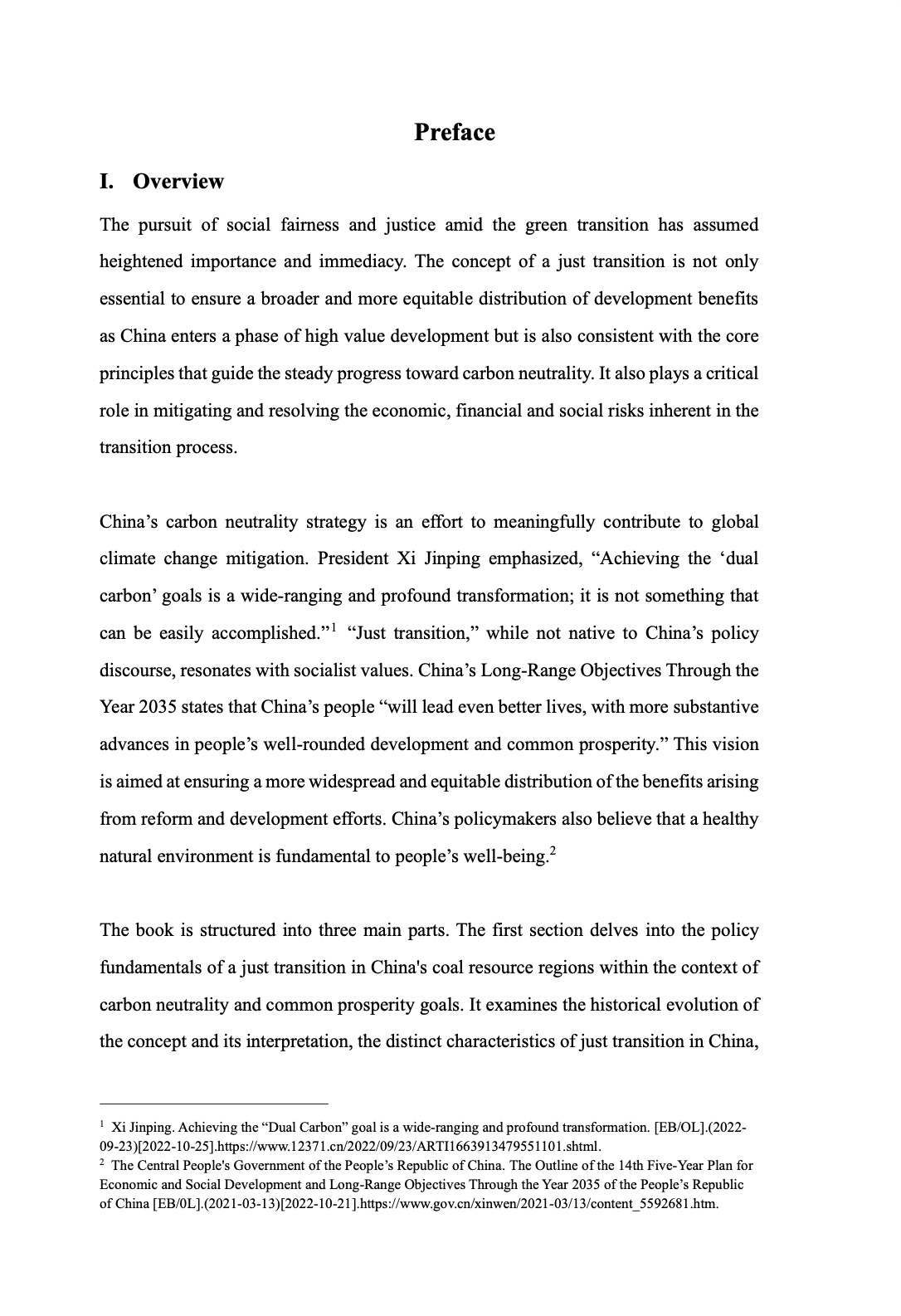
Book Preface
English, Chinese
SEP 2023
Book
Just Transition
Summary:
This book preface introduces the concept, policy basis, and importance of a "just transition" within the context of China's carbon neutrality and common prosperity goals. It defines the term, explains its relevance to coal resource-dependent regions in China, and outlines a proposed framework for a just transition policy system. The preface synthesizes domestic and international case studies to present a high-level analysis and provide recommendations for top-level design, pilot programs, and policy measures to ensure a fair and equitable energy transition.
Related
-
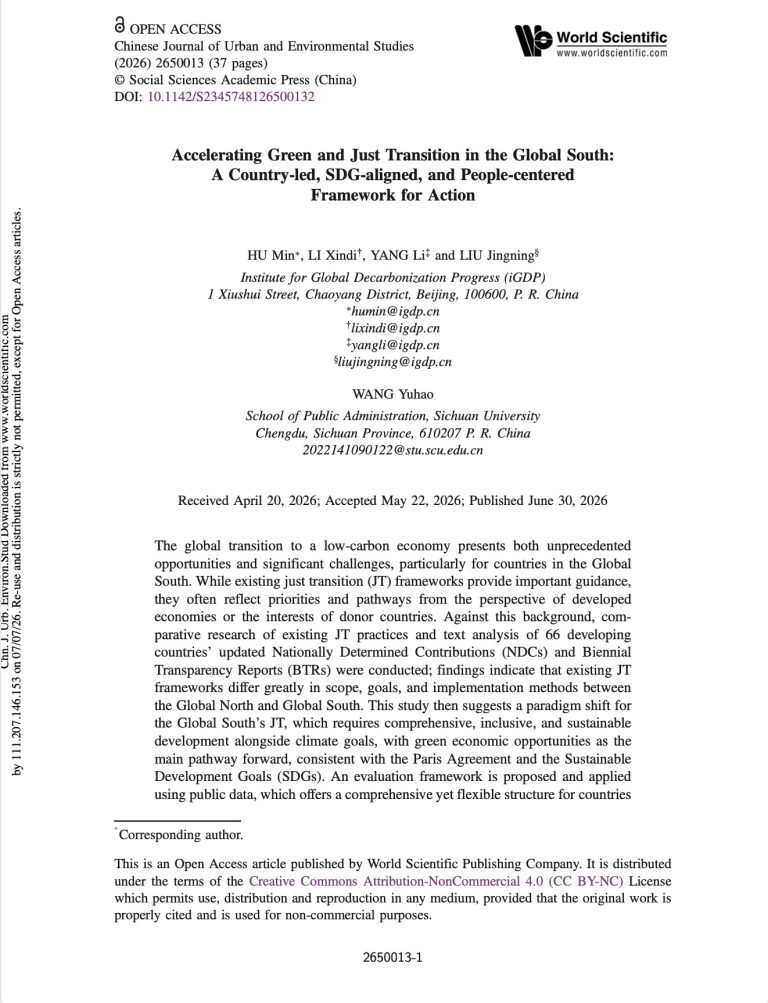
Accelerating Green and Just Transition in the Global SouthThis paper argues that just transition (JT) frameworks built for developed economies don't fit the realities of the Global South — where the challenge isn't just managing the decline of fossil fuel industries, but industrializing, expanding energy access, and reducing poverty while also decarbonizing. The paper reviews major existing JT frameworks (UNFCCC, EU, G20, China, Brazil) and analyzes the climate plans (NDCs) and transparency reports of 66 developing countries to see how JT is actually being defined and pursued on the ground. From this, it builds a new evaluation framework organized around three pillars — Goals (where countries want to end up, climate and development-wise), Pathways (how they're getting there, e.g. green jobs, investment, industries), and Readiness and Capacity (whether they have the social safety nets, finance, and institutions to pull it off) — then tested this framework against real country data to show it can help identify gaps and guide more tailored, country-led policy.Academic Journal Article JUN 2026
-
From Concept to ActionChina is offering other Global South countries a viable way to discover a just transition pathway of their own.Op-ed DEC 2025

-
A Difficult Consensus Amid Sluggish Progress: The Challenges and Future of COP30COP30 ultimately achieved “limited” progress, with trade issues discussed for the first time and a just transition mechanism formally established. At the same time, however, the absence of a “fossil fuel roadmap,” the failure to raise emission reduction targets, and the persistent challenges surrounding financing left many experts disappointed.Interview NOV 2025

-
Achieving Just Transition in China’s Coal Resource-Based RegionsThis policy brief examines the challenges and pathways for achieving a just transition in China's coal-dependent regions as the country pursues its dual carbon goals. It focuses on four critical dimensions that require coordinated action: fostering high-quality economic development through industrial diversification, safeguarding livelihoods and employment security for coal workers and vulnerable communities, managing the phased reduction of coal production while maintaining energy supply stability, and strengthening environmental restoration in mining areas. The policy brief draws on domestic and international experiences to outline a dual-stage transition strategy—first upgrading existing coal operations with smarter and cleaner technologies, then leveraging regional resources to cultivate renewable energy and complementary green industries. It also stresses the importance of robust social safety nets, worker retraining programs, and ecological rehabilitation measures such as repurposing abandoned mining lands for clean energy projects and carbon sinks. The policy brief argues that proactive planning, dynamic capacity adjustment mechanisms, and integrated multi-energy supply systems are essential to mitigate the socioeconomic and environmental impacts of the coal industry's decline, ensuring that the transition is both equitable and sustainable.Policy Brief JUL 2023