
2022 Global Coal Phaseout Progress Tracking Report
Chinese
JAN 2023
Report
Energy Transition Power
Summary:
This report tracks global progress on coal phase‑out during 2022. It documents national policy actions across Europe, Asia‑Pacific, and Africa—ranging from accelerated phase‑out deadlines in Germany, the Czech Republic, and Romania, to new financing commitments for coal retirement in Indonesia and South Africa. The report also covers the evolving stance of financial institutions, including banks and insurers that have tightened or loosened restrictions on coal, oil, and gas financing. In addition, it synthesizes key findings from recent research on the economics, employment impacts, and insurance challenges of coal transition. The report provides a factual record of the uneven but persistent global shift away from coal, highlighting both progress and obstacles while emphasizing the growing importance of just transition mechanisms for affected workers and communities.
Suggested citation:
Han Di, Wang Yanhui. (2022). 2022 Global Coal Phase-Out Progress Tracking Report. Beijing: Institute for Global Decarbonization Center (iGDP).
Related
-
Decarbonizing Steel Industry Thermal SystemsThis report examines the low-carbon transition pathways for thermal/heating systems in China's steel industry, reviewing the policy drivers behind decarbonization and analyzing the technological trajectory across near-, medium-, and long-term horizons (2025–2060). It surveys and compares the applicability, economics, and emissions-reduction potential of key technologies—including waste heat recovery, system efficiency improvements, and hydrogen-based metallurgy—through in-depth case studies (HBIS Group's hydrogen metallurgy, Shougang Jingtang's process interface optimization, and Sinosteel/CISP's hydrogen-based smelting reduction, among others). It further identifies the practical barriers to scaling these technologies (high green hydrogen costs, renewable energy intermittency, stranded-asset risk, and weak cross-sector coordination mechanisms), and proposes policy recommendations to accelerate the sector's shift toward integration with renewable energy systems.Report AUG 2026
-
Can China’s zero-carbon industrial parks go global?In March 2026, China’s 15th Five Year Plan set a target to build “around 100 national level zero-carbon industrial parks” – zones for industrial production with net-zero or close to zero carbon emissions. It marked an upgrade to what had previously been a series of pilot projects around the country and catapulted such zones to a national priority.Interview JUL 2026
-
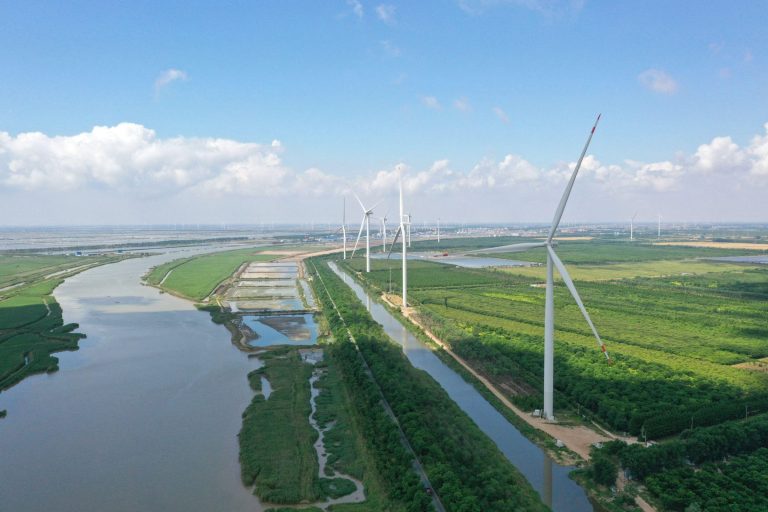
Green Power Consumption Faces New ChallengesWith the rapid growth in installed capacity, the core challenge facing the power system is shifting from “whether we can generate more green electricity” to “whether we can effectively utilize green electricity at the right time and place.”Interview JUL 2026

-
In-Depth: China’s New Energy Sector Moves Beyond “Scale Worship”On July 23, the National Development and Reform Commission and the National Energy Administration released the “15th Five-Year Plan for Renewable Energy Development” (hereinafter referred to as the “Plan”), which sets out a systematic roadmap for the development of renewable energy over the next five years.Interview JUL 2026
-
Implementation of the Carbon Peaking Action Plan: Data Centers and AI Infrastructure Integrated into the Carbon Control FrameworkOn the evening of July 9, the State Council officially issued the “Action Plan for Carbon Peaking During the 15th Five-Year Plan Period” (hereinafter referred to as the “Plan”). As the overarching framework for China’s critical phase in achieving its carbon peaking goal, the Plan sets out systematic measures across five key areas: energy structure adjustment, green industrial transformation, and carbon reduction in priority sectors.Interview JUL 2026

-
iGDP’s Hu Min: How Can We “Access” and “Effectively Utilize” Green Power?The 2026 Summer Davos Forum (the 17th Annual Meeting of the World Economic Forum’s New Champions) recently concluded in Dalian, Liaoning. With “Scaling Innovation” as its theme, the forum brought together more than 1,700 delegates from over 90 countries and regions to discuss five core topics.Interview JUL 2026