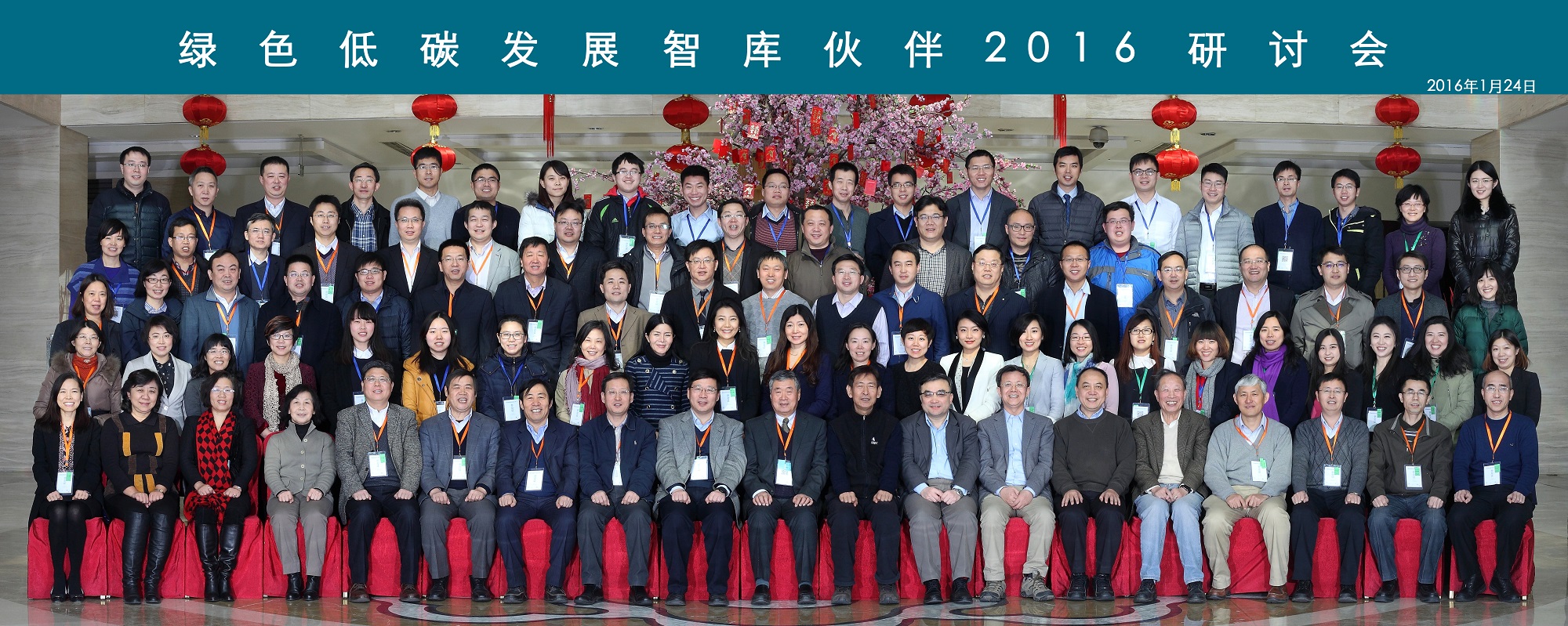
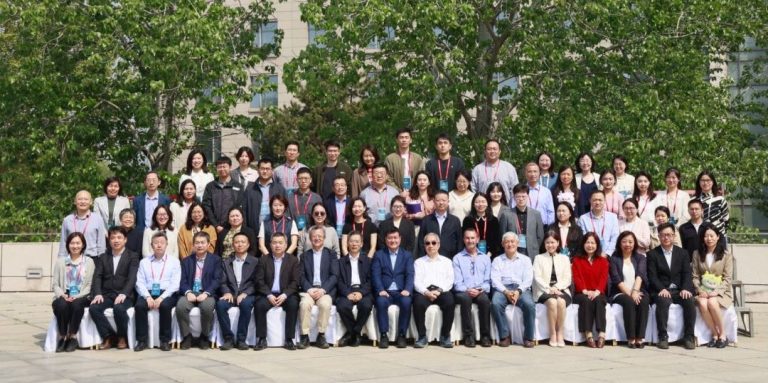
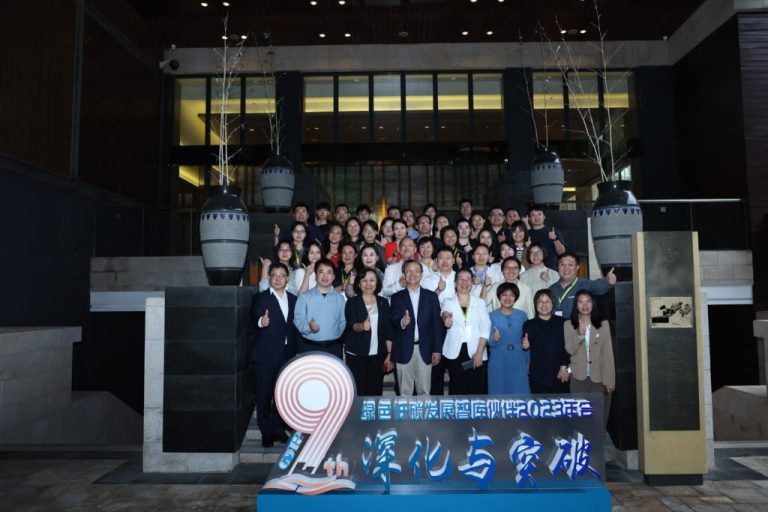
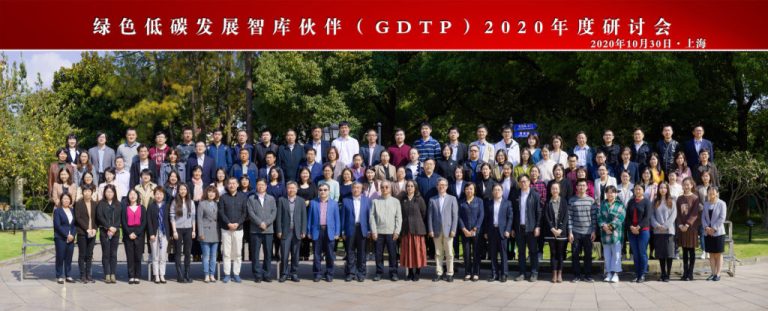
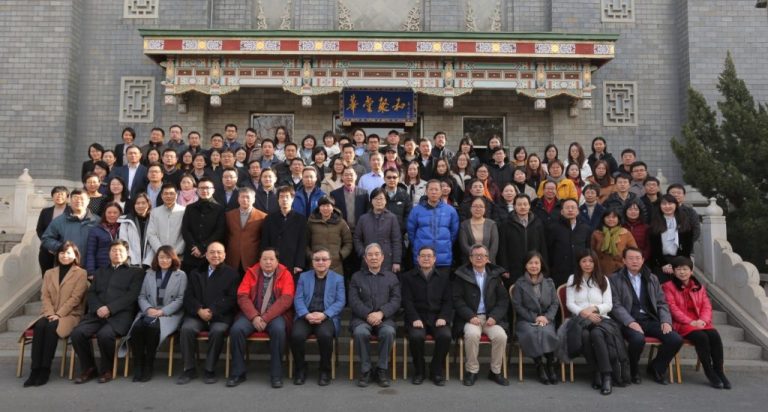
He Jiankun, Member of the National Expert Committee on Climate Change, Convener and Senior Advisor of the Green and Low-carbon Development Think Tank Partnership (GDTP), stated in his opening remarks that the Paris Agreement marked a new turning point in climate change response and established a new international climate regime. In the future, the international governance system should achieve win-win outcomes in two respects: first, each country should achieve synergy between development and emission reduction, which requires pursuing a low-carbon development pathway; second, countries should achieve mutually beneficial cooperation by sharing benefits, creating new opportunities, pursuing common development and achieving win-win cooperation. He further pointed out that the new turning point in the international community requires building China’s domestic capacity for low-carbon transition. Under current circumstances, China must promote green and low-carbon development through innovation-driven approaches, while ensuring sustained and stable economic growth and accelerating the transition toward a low-carbon economy.
The negotiations on loss and damage can be described as being “unlocked” only at the very last moment. Ultimately, all countries agreed to establish a loss and damage fund and make arrangements on the operational details of the fund before the conclusion of the 2023 climate conference. Although the specific factors that facilitated progress in the negotiations remain unclear, the final text reflected the core demands of all parties while also incorporating compromises. For example, funding sources will not be limited to developed countries, and contributions from other channels and countries are also welcomed. It is foreseeable that emerging economies such as China and India will continue to face pressure regarding financial contributions. Under the current framework, the fund is intended for developing countries, with a particular focus on vulnerable countries, which to some extent reflects the position of the European Union.
Pan Jiahua, Director of the Center for Sustainable Development Studies at the Chinese Academy of Social Sciences, delivered a keynote speech on China’s low-carbon urbanization goals and choices. He argued that urban scale should be aligned with resource and environmental carrying capacity, and that low-carbon urbanization among large, medium-sized and small cities should be scientifically planned and coordinated.
Zou Ji from the National Center for Climate Change Strategy and International Cooperation delivered a keynote speech titled “Challenges and Tasks in Implementing the Outcomes of the Paris Agreement.” He shared the key contents of the Paris Agreement outcomes, as well as the circumstances, challenges and tasks facing China over the next 5 to 15 years. He emphasized that the main approach for implementing the outcomes of the Paris Agreement is to establish integrated goals and action plans that combine economic transformation and upgrading, structural adjustment, carbon constraints and local environmental constraints, so as to maximize transition benefits and minimize costs.
Yang Chaofei from the China Industrial Environmental Protection Promotion Association delivered a thematic speech on “Green Development and Green Investment.” He proposed four policy recommendations for advancing green development, green investment and low-carbon development: first, transforming government functions and improving the social governance system; second, promoting technological innovation as a key condition for green investment; third, advancing institutional innovation as an important component of green investment and development; and fourth, promoting the sharing of development benefits as an important goal of green investment and low-carbon development. Looking back at recent progress in climate governance, it is evident that climate change response has continued to gain importance on countries’ diplomatic and political agendas. Climate-related concerns have increasingly interacted with agendas at major diplomatic platforms such as the G7 and G20. Such interaction will be both beneficial and necessary.
During the thematic discussion sessions, experts and institutional representatives of GDTP conducted in-depth exchanges and discussions on four topics: “Green and Low-carbon Development: Outlook for the 13th Five-Year Plan,” “Urban Green and Low-carbon Development,” “Energy-Environment-Economy System Analysis,” and “Green-oriented Pricing, Taxation and Fiscal Reforms.”
During the session on “Green and Low-carbon Development: Outlook for the 13th Five-Year Plan,” participating experts discussed the fundamental approaches of the 13th Five-Year Plan, specific goals and implementation pathways for green and low-carbon development, approaches to incorporating the five development concepts of innovation, coordination, green development, openness and sharing, as well as major challenges and opportunities ahead.
During the session on “Urban Green and Low-carbon Development,” experts reviewed challenges encountered in practice from different perspectives, including low-carbon development awareness, urban planning, implementation and innovation mechanisms, and discussed potential areas for advancing urban low-carbon development during the 13th Five-Year Plan period.
During the session on “Energy-Environment-Economy System Analysis,” experts shared insights based on their assessments of new trends, structures and drivers of China’s socio-economic development during and beyond the 13th Five-Year Plan period, low-carbon development trends and the emerging global climate governance framework in the post-Paris Agreement era. Discussions focused on deepening model theories and methodological systems, expanding research perspectives and scope, improving research outputs to support policymaking, and identifying key research areas and priorities for the short, medium and long term.
During the session on “Green-oriented Pricing, Taxation and Fiscal Reforms,” experts conducted in-depth discussions on future needs and priorities for pricing, fiscal and taxation reforms, coordination between pricing, fiscal and taxation policies and other policy instruments, and in particular, how carbon trading mechanisms can be coordinated with energy, environmental protection and other pricing, fiscal and taxation policies.
The GDTP 2016 Annual Conference was organized by the Secretariat of the Green and Low-carbon Development Think Tank Partnership (GDTP), and co-organized by the Institute for Global Decarbonization Progress (iGDP) and Shenzhen Green Low Carbon Development Foundation (GDF).