
Progress on Green Public Investment in Support of Carbon Neutrality
Chinese
June 2025
Report
Green Economics Subnational Climate Action
Summary:
This report tracks and evaluates the "greenness" of public investment across 25 provinces from 2020 to 2024, using provincial major project lists as the basis for analysis. Using the Green and Low-Carbon Transition Industry Guidance Catalogue (2024) as the evaluation standard, it classifies projects as green or non-green and analyzes trends in green project shares, sectoral composition, and regional disparities. It also tracks coal power and high-energy-consuming projects. The analysis finds that green project shares have increased nationally but remain uneven across provinces and sectors, with renewables dominating green investment. It provides recommendations for integrating carbon assessment into project approval and strengthening dynamic management of major projects under the carbon dual-control framework.
Suggested citation:
Liu Xueye; Hu Min; Li Ang; Zhang Xiaoli. (2025). Progress on Green Public Investment Supporting Carbon Neutrality Goals: 2020–2024 Provincial Major Project Lists Greenness Assessment. Beijing: Institute for Global Decarbonization Progress (iGDP). June 2025.
Related
-
China Carbon Neutrality Tracker 2025 Annual ReportThis report tracks and quantitatively assesses the green and low-carbon transition of 30 Chinese provincial-level regions over the decade from 2013 to 2022 using the Subnational Low-Carbon and Green Index for China (Subnational LOGIC), which encompasses 26 indicators across four categories: carbon productivity; carbon emissions (covering energy, power, industry, buildings, transport, and agriculture); environmental conditions and land use; and policy systems and public participation. The analysis employs multiple classification frameworks—economic-geographic regions, economic development stages (Pioneer, Leading, Catching-Up, and Developing Economies), national major regional strategies, and energy development positioning—to identify structural divergences in transition patterns. It finds that scores improved across all provinces, with carbon productivity, energy, and power showing nationwide progress while transport, buildings, and industry remain key frontiers for deep decarbonization. The report also presents in-depth case studies of Guangdong, Jiangxi, Shanxi, and Hainan to examine differentiated transition pathways across economic development stages.Report JUN 2026
-
The EU Pushes for Domestic Manufacturing: Where Will China’s Clean Technology Products Go?In its document, the European Commission explicitly stated that China accounts for more than 80 percent of global production capacity in the battery manufacturing and solar photovoltaic sectors; at the same time, the European wind power industry is facing cost pressures from low-priced imports from China. On April 27, China’s Ministry of Commerce responded by stating that the bill constitutes “serious institutional discrimination” and will undermine fair competition.Interview JUN 2026
-
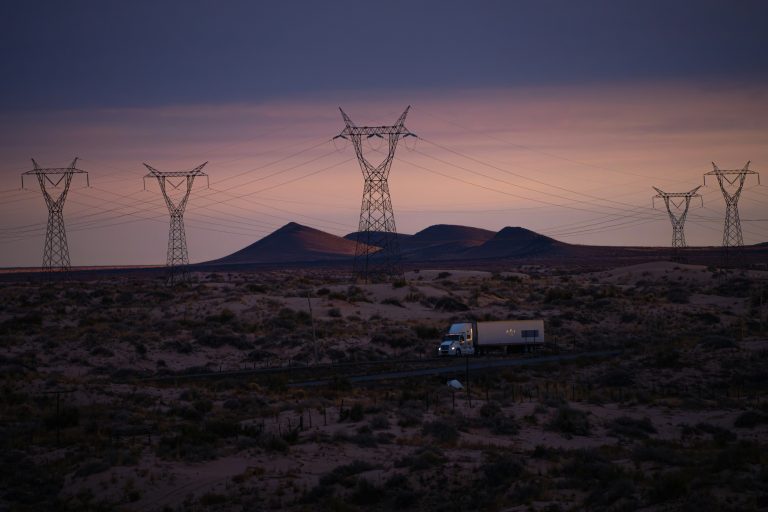
Hainan’s Model for Promoting the Adoption of Battery-Swap Heavy-Duty TrucksHainan has built and put into operation 37 battery-swapping stations for heavy-duty trucks, providing basic coverage of the island’s main highways and key industrial parks, thereby effectively advancing the transition of new-energy heavy-duty trucks from pilot projects in typical application scenarios to full-scale electrification across the region.Op-ed MAY 2026
-
Medium and Long-Term Outlook for Low-Carbon Transition in Tianjin Using EPS ModelingThis report assesses the low-carbon transition pathway for Tianjin Municipality under China's carbon peaking and carbon neutrality goals, using the Energy Policy Simulator (EPS) model to quantify energy consumption and greenhouse gas emission trajectories to 2060. It employs a scenario-based quantitative modeling framework, constructing three scenarios—a 2020 Policy Freeze scenario, a Policy scenario, and a Dual Carbon scenario—to evaluate the emission reduction effects of different policy combinations. The EPS Tianjin 2024 model covers five core sectors: power, industry, transport, buildings, and land use and forestry, capturing inter-sectoral linkages and mitigation potentials. The analysis identifies critical areas and priority policies for achieving carbon neutrality, assesses investment requirements, and evaluates the economic and employment impacts of the transition.Report Summary APR 2026
-
The EU’s Carbon Border Adjustment MechanismThis report analyzes the European Union's Carbon Border Adjustment Mechanism (CBAM) as it transitions from its preparatory phase to full implementation, focusing on three critical policy areas with direct implications for Chinese exporters: the recognition of carbon prices paid in producing countries, the potential conditional acceptance of international carbon credits, and the technical alignment between CBAM and the EU ETS free allowance benchmarks. It combines systematic legal review of the CBAM Regulation and its implementing acts with practical policy assessment, drawing on official EU legislative documents, technical studies from the Joint Research Centre (JRC) and the European University Institute (EUI), and expert reports from Adelphi and the Climate Club. The research examines the regulatory texts, identifies remaining uncertainties, and derives forward-looking policy recommendations for Chinese authorities and enterprises.Report APR 2026

-
Data Insights from the Two Sessions: How Are Local Governments Planning for Green Transition?On March 5, 2026, Chinese Premier Li Qiang mentioned the “green development goals” for 2026 in the “Government Work Report”: guided by “carbon peaking and carbon neutrality,” the country will advance carbon reduction, pollution control, expansion of green spaces, and economic growth, thereby strengthening the momentum for green development.Interview MAR 2026