
January 18, 2019
Beijing
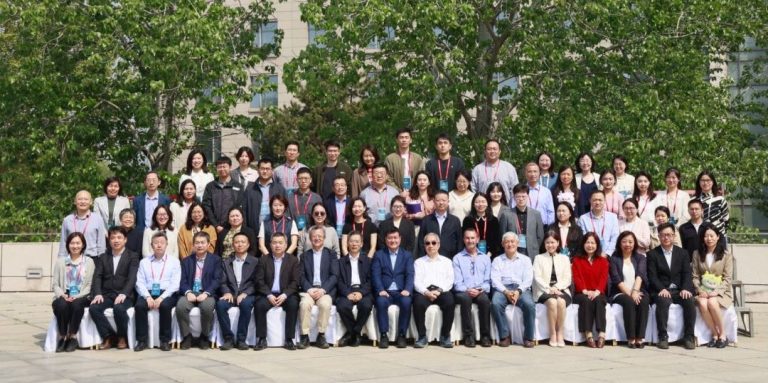
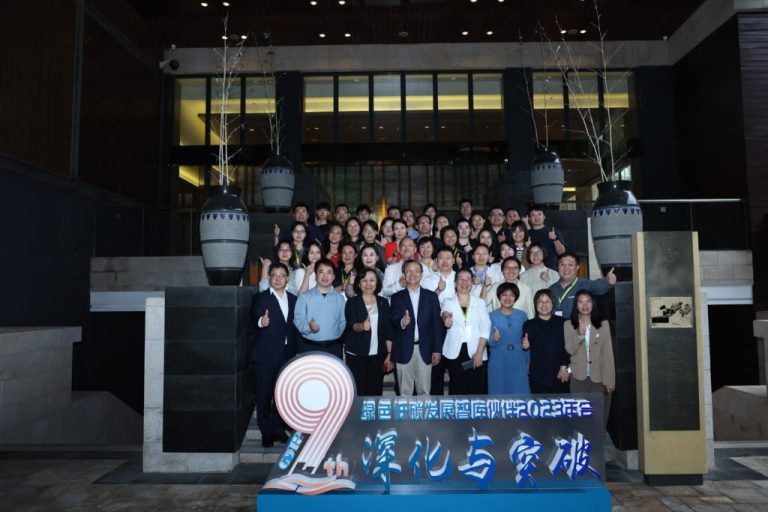
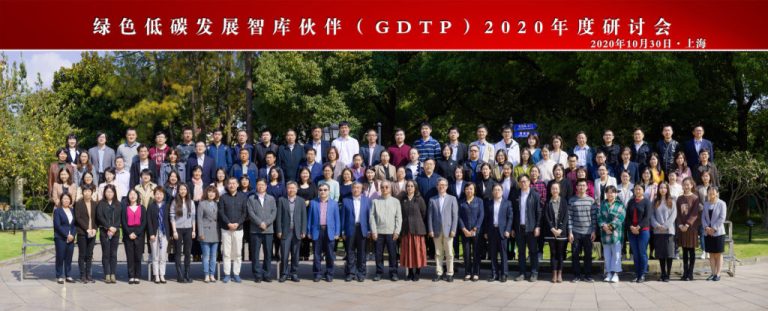
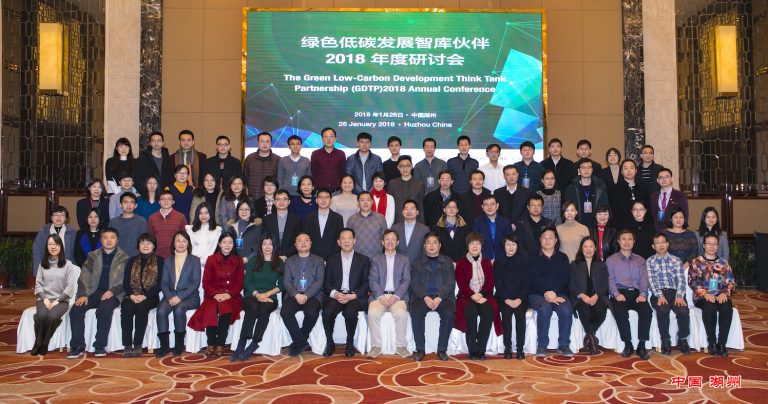
More than 120 representatives from partner institutions and think tank experts across the country gathered in Beijing, the birthplace of GDTP, to look ahead to building a green and low-carbon China by 2030 and jointly explore the future development of the think tank platform.
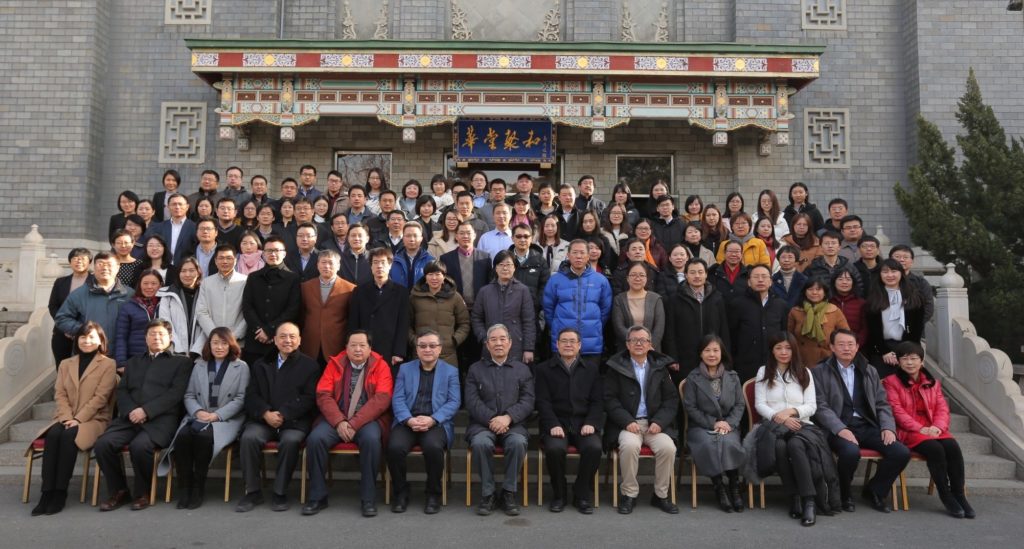

The GDTP 2019 Annual Conference and 5th Anniversary Celebration was held in Beijing on January 18, 2019. Since its establishment on the National Low-Carbon Day in June 2014, the Green and Low-carbon Development Think Tank Partnership (GDTP) has entered its fifth year and become an important platform for knowledge innovation and exchange in the field of green and low-carbon development in China.More than 120 representatives from partner institutions and think tank experts across the country returned to Beijing, the birthplace of GDTP, to discuss pathways toward building a green and low-carbon China by 2030 and jointly explore strategies for the future development of the think tank platform.

Liu Yanhua, Chair of the National Expert Committee on Climate Change and Senior Advisor of GDTP, provided a strategic analysis of the current challenges facing climate change response and green and low-carbon transition in his opening remarks, and offered guidance on the future development of the think tank platform.

Li Gao, Director-General of the Department of Climate Change of the Ministry of Ecology and Environment, analyzed the latest domestic and international developments in climate change response and provided practical guidance for the development of the think tank platform.

Zou Ji, President of the Energy Foundation China, reviewed and analyzed key strategic and policy issues that require further research to advance China’s green and low-carbon transition.

The conference was moderated by Zhang Xiliang, Chair of the Energy Systems Engineering Specialized Committee of the China Energy Research Society.

Pan Jiahua, Member of the Chinese Academy of Social Sciences and Director of the Institute for Urban and Environmental Studies at the Chinese Academy of Social Sciences, delivered a keynote speech. He emphasized that China should pursue a pathway toward both a low-carbon economy and the low-carbon transformation of economic development.

Wang Zhongying, Deputy Director-General of the Energy Research Institute of the National Development and Reform Commission, focused on how green and low-carbon development can be integrated into various sectors.

Jiang Liping, Deputy Director of State Grid Energy Research Institute, elaborated on future opportunities and challenges in energy transition and power sector reform.

Qi Ye, Professor at the Division of Public Policy of the Hong Kong University of Science and Technology and Distinguished Professor of School of Public Policy and Management at Tsinghua University, delivered a presentation introducing the newly released China Low Carbon Development Report 2018.

Lin Ling, Director of the Resources and Environment Branch of China National Institute of Standardization, introduced progress in China’s standardization efforts for addressing climate change.

Hu Min, China Country Director of the Kigali Cooling Efficiency Program, analyzed the contribution of green cooling to low-carbon transition.

Zhou Nan, Director of the Energy Research Division and Senior Scientist and Director of the China Energy Group at Lawrence Berkeley National Laboratory, provided a comprehensive interpretation of low-carbon transition pathways across sectors toward 2050.

The first parallel forum held in the afternoon focused on “Ow-carbon Transition of Energy Economy” and was moderated by Gao Hu, Director of the Energy Economics Research Center of the Energy Research Institute of the National Development and Reform Commission.

Liu Qiang, Director of the Strategic Planning Department of the National Center for Climate Change Strategy and International Cooperation, shared perspectives on green and low-carbon strategies toward 2050.

Tan Xianchun, Deputy Director of the Institute for Sustainable Development at the Institutes of Science and Development, Chinese Academy of Sciences, introduced theories and practices related to China’s green and low-carbon development planning.

Zhang Qi, Professor at China University of Petroleum and President of the China Energy Strategy Institute, introduced low-carbon transition pathways in sectors including natural gas, nuclear power and electric vehicles based on the framework of understanding trends, clarifying principles and optimizing approaches.

Wang Ke, Associate Professor at the School of Environment and Natural Resources of Renmin University of China, presented the team’s research findings, insights and reflections on China’s long-term low-carbon goals, pathways and synergies.

Ou Xunmin, Deputy Director of the China Automotive Energy Research Center at Tsinghua University, introduced work and reflections in the field of low-carbon transportation development.

Tian Zhiyu, Deputy Director of the Energy Efficiency Center of the Energy Research Institute of the National Development and Reform Commission, discussed perspectives and questions related to energy transition and high-quality development with participating experts.

Chen Ying, Researcher at the Institute for Urban and Environmental Studies of the Chinese Academy of Social Sciences, moderated the second parallel forum titled “Local Carbon Peaking and a Zero-carbon Future.”

Yang Xiu, Associate Researcher at the National Center for Climate Change Strategy and International Cooperation, delivered an introductory presentation reviewing international experiences in developing zero-carbon cities and sharing reflections on China’s future pathways toward zero-carbon cities. She raised three key discussion questions: Where should we go? How should we get there? What actions should be taken?

Wang Zhigao, Director of the Low-carbon Cities Program at the Energy Foundation, shared observations and experiences regarding advancing efforts to achieve earlier carbon peaking in cities.

Sun Zhenqing, Director of the Energy, Environment and Green Development Research Center at Tianjin University of Science and Technology, shared preliminary research findings on carbon peaking pathways in optimized development regions.

Xiang Dingxian, Deputy Director of Wuhan Energy Conservation Supervision Center, shared Wuhan’s practices in implementing low-carbon development concepts and actions.

Subsequently, Liu Jia, Director of the Green Development Research Center of Shanghai Information Center; Cai He, Deputy Chief Engineer of Zhejiang Economic Information Center; and Zhou Yong, Deputy Director of Shandong Institute of Science and Technology Strategy Development, joined the discussion and exchanged views on the three questions proposed by Yang Xiu.
Wu Libo, Director of the Center for Energy Economics and Strategy Studies at Fudan University, moderated the third parallel forum titled “China Carbon Market Development Report.”

Duan Maosheng, Director of the China Carbon Market Research Center at Tsinghua University and Editor-in-Chief of the China Carbon Market Development Report, introduced the report’s distinctive features and key contents.

The principal authors of the report’s chapters, including Zhang Xiliang, Director of the Institute for Energy, Environment and Economy at Tsinghua University; Qi Shaozhou, Director of the Center for Climate Change and Energy Economics at Wuhan University; Zhou Jian, Associate Professor at the Institute for Energy, Environment and Economy at Tsinghua University; Tang Renhu, General Manager of Beijing Sino-Carbon Innovation Investment Co., Ltd.; Zeng Xuelan, Director of Guangdong Climate Change Research Center at Sun Yat-sen University; and Li Jin, Assistant General Manager of Shanghai Environment and Energy Exchange, participated in a roundtable discussion.The experts shared their insights and exchanged views based on the latest developments in carbon market development and the respective sections they contributed to the report.

Chai Qimin, Director of the Department of International Cooperation at the National Center for Climate Change Strategy and International Cooperation, moderated the final parallel forum titled “International Cooperation on Climate Change.”

Yang Fuqiang, Senior Advisor at the Natural Resources Defense Council, shared his perspectives on recent developments and changes in international cooperation on climate change.

Liao Cuiping, Researcher at Guangzhou Institute of Energy Conversion, Chinese Academy of Sciences, introduced Guangzhou’s participation in international cooperation, including its development process, achievements, lessons learned and recommendations.

Yu Hongyuan, Director of the Institute of Comparative Politics and Public Policy at Shanghai Institutes for International Studies, shared reflections on international environmental cooperation from a geopolitical perspective.

Wang Dong, Director of Shenzhen Climate Change Research Center, shared how Shenzhen has benefited from international cooperation and discussed its future approaches to further engaging with the international community.
During the concluding session of the conference, Professor Zhang Xiliang proposed that future GDTP annual conferences should strengthen problem-oriented dialogue and exchanges, and generate conclusions and recommendations to provide technical support for policymakers. He noted that GDTP’s future work would mainly focus on low-emission development strategies, carbon markets and low-carbon cities.

At the “GDTP 5th Anniversary Expert Reception” held in the evening, Wang Yi, Deputy Director of the Institutes of Science and Development, Chinese Academy of Sciences, extended congratulations on the fifth anniversary of the Green and Low-carbon Development Think Tank Partnership and shared his strategic reflections on China’s green and low-carbon transition under the new circumstances.

Hu Xiulian, Researcher at the Energy Research Institute of the National Development and Reform Commission and representative of think tank experts, also provided suggestions for the future development of the think tank platform.
Remain true to the original aspiration and continue forging ahead. This represents the shared commitment of GDTP experts and partner institutions.Looking ahead, the Green and Low-carbon Development Think Tank Partnership will continue to bring together the strengths of China’s think tanks and provide more open, professional and practical recommendations to support China’s green and low-carbon development.