January 26, 2018
Huzhou, Zhejiang Province
The conference was organized by the Energy Systems Engineering Specialized Committee of the China Energy Research Society and co-organized by the Zhejiang Cooperation Center for Climate Change Response and Low-carbon Development, Huzhou Municipal Development and Reform Commission, Institute for Global Decarbonization Progress (iGDP), and Green Finance Committee of the China Society for Finance and Banking. The conference received strong support from the Energy Foundation.

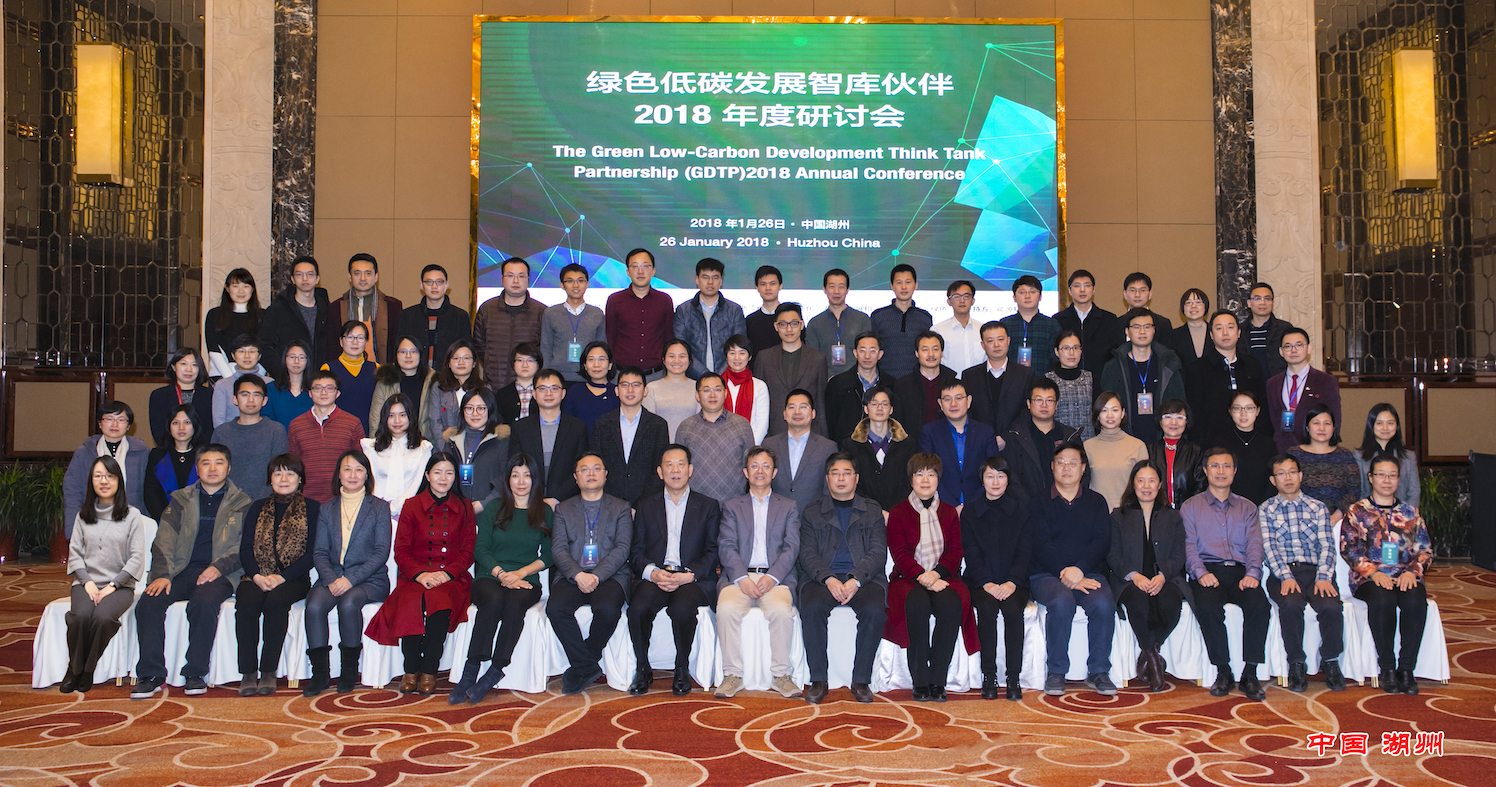
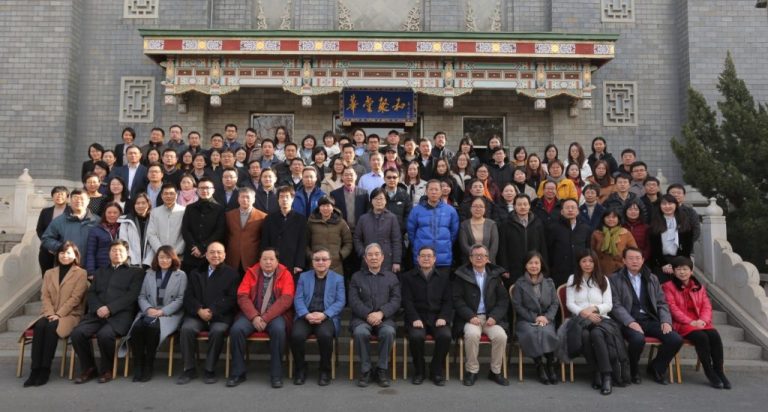
The GDTP 2018 Annual Conference was held in Huzhou, Zhejiang Province, on January 26, 2018.The conference was organized by the Energy Systems Engineering Specialized Committee of the China Energy Research Society and co-organized by the Zhejiang Cooperation Center for Climate Change Response and Low-carbon Development, Huzhou Municipal Development and Reform Commission, Institute for Global Decarbonization Progress (iGDP), and Green Finance Committee of the China Society for Finance and Banking. The conference received strong support from the Energy Foundation.
Under the theme of “New Approaches to China’s Low-carbon Transition,” the conference reviewed the progress of local low-carbon development during the mid-term period of the 13th Five-Year Plan and discussed urban carbon peaking pathways and China’s medium- and long-term development strategies. Nearly 100 participants from home and abroad traveled to Huzhou despite a once-in-a-decade snowstorm. Despite the severe weather, experts and representatives remained committed to contributing insights and recommendations for China’s green and low-carbon development.

The conference was moderated by Zhang Xiliang, Chair of the Energy Systems Engineering Specialized Committee of the China Energy Research Society and Director of the Institute for Energy, Environment and Economy at Tsinghua University. In his keynote speech, Professor Zhang introduced the latest progress in the development of China’s carbon market.

Wang Yanhui, Deputy Director of the Zhejiang Cooperation Center for Climate Change Response and Low-carbon Development, delivered remarks and introduced Zhejiang Province’s low-carbon initiatives during the 13th Five-Year Plan period.


Tang Jie, former Vice Mayor of Shenzhen and Special Representative for Climate Change Affairs, delivered a keynote speech introducing Shenzhen’s experiences and practices in green and low-carbon development.

Wang Sheng, Deputy Director of Chongqing Academy of Social Sciences, delivered a keynote speech and provided valuable suggestions on the research work of low-carbon think tank partner institutions.

Meng Hao, Researcher at the Institute of Scientific and Technical Information of China, interpreted the National Science and Technology Innovation Plan for the 13th Five-Year Plan Periodand provided a detailed introduction to relevant arrangements for technological innovation in the green and low-carbon development field.

Zou Ji, President of the Energy Foundation China Beijing Office, delivered remarks and a keynote speech, sharing perspectives on China’s medium- and long-term development strategies.

Session: Review of Local Low-carbon Development for the 13th Five-Year Plan Periodand Prospects for Urban Carbon Peaking
The session was moderated by Zhou Yong, Deputy Director of the Institute of Strategy of Shandong Academy of Sciences.

Liao Cuiping, Deputy Director of the Energy Strategy Research Office at Guangzhou Institute of Energy Conversion, Chinese Academy of Sciences, introduced the progress of Guangzhou’s low-carbon research initiatives.

Lei Xiaoling, Director of the Low-carbon Center of Chongqing Academy of Science and Technology, introduced challenges and key technologies related to mountainous sponge city development.

Xiang Dingxian, Deputy Director of Wuhan Energy Conservation Supervision Center, introduced Wuhan’s achievements and challenges in low-carbon development.

Zhou Nan, Director of the Energy Analysis Division at Lawrence Berkeley National Laboratory (LBNL), U.S. Department of Energy, provided an in-depth analysis of urban energy efficiency improvement, low-carbon development and resilience enhancement in the context of climate change response.

Li Ang, Program Director of the Institute for Global Decarbonization Progress (iGDP), introduced the key contents of the Guidelines for Formulating Urban Low-carbon Development Plans, prepared under the guidance of Hu Xiulian, Researcher at the Energy Research Institute of the National Development and Reform Commission.

Wang Zhigao, Director of the Low-carbon Cities Program at the Energy Foundation, introduced international organizations’ initiatives on urban carbon peaking and moderated the thematic session and discussion on “The Belt and Road Initiative and Green Investment.”

Zhang Xiaoling, Professor at City University of Hong Kong, introduced research findings on “The Impacts of the Belt and Road Initiative on Local and Global Sustainable Development.”

Laura Altinger, Director of the Climate Change Program at the United Nations Economic and Social Commission for Asia and the Pacific (UNESCAP), shared perspectives on “Regional Green Finance Actions.”

Zolzaya Enkhtur, Senior Project Officer of the Ministry of Environment and Tourism of Mongolia, shared Ulaanbaatar’s local government green development plan and its commitments under the Nationally Determined Contribution (NDC).
At the conclusion of the conference, moderator Zhang Xiliang announced that the 5th GDTP Annual Conference would be held in Shandong Province.