
October 30, 2020
Shanghai
The conference was organized by the Energy Systems Engineering Specialized Committee of the China Energy Research Society and co-organized by the Center for Energy Economics and Strategy Studies at Fudan University, the Secretariat of the Green and Low-carbon Development Think Tank Partnership (GDTP), and the Institute for Global Decarbonization Progress (iGDP), supported by the Energy Foundation.
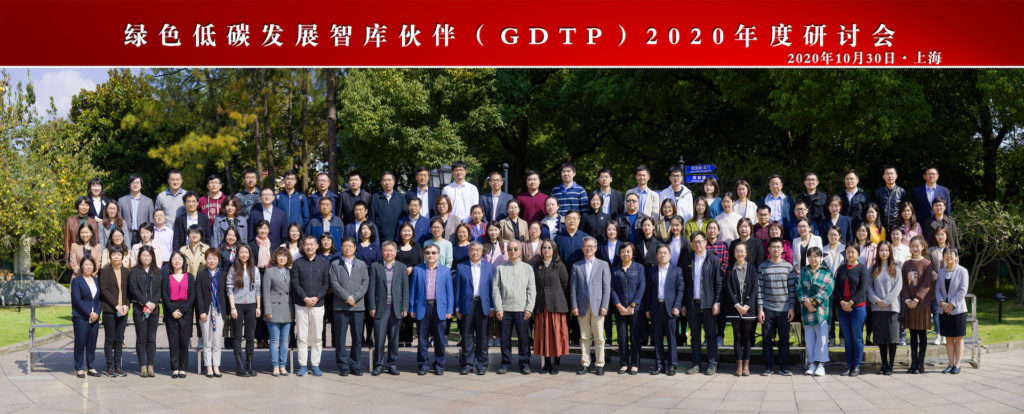

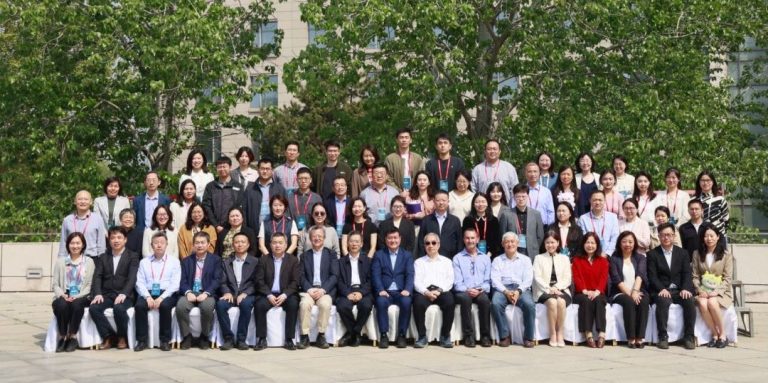
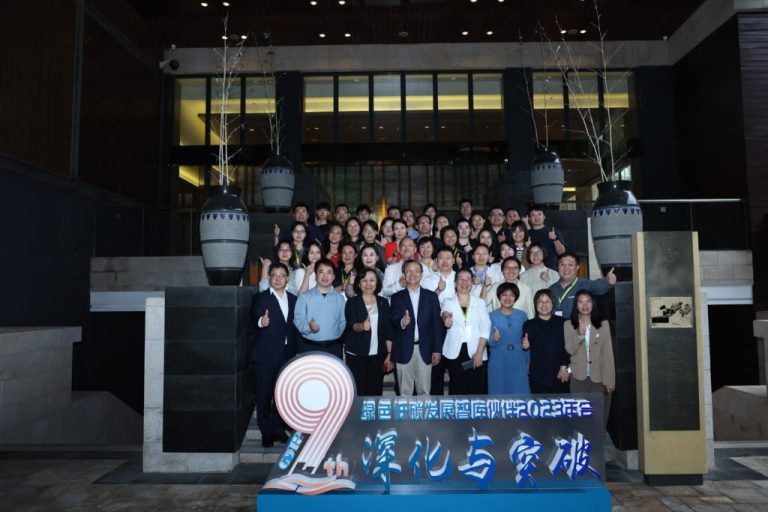
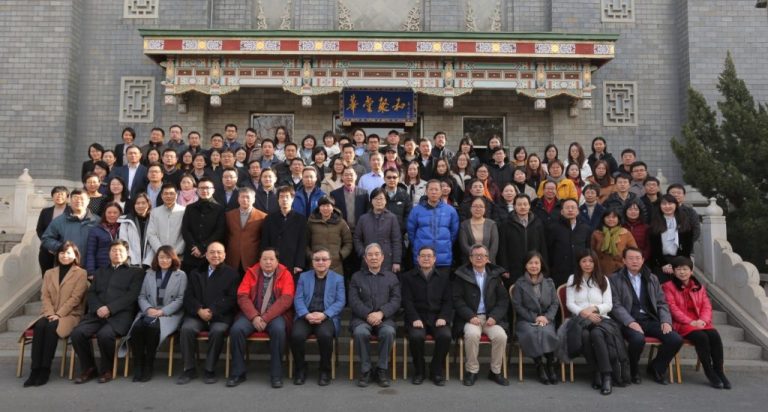
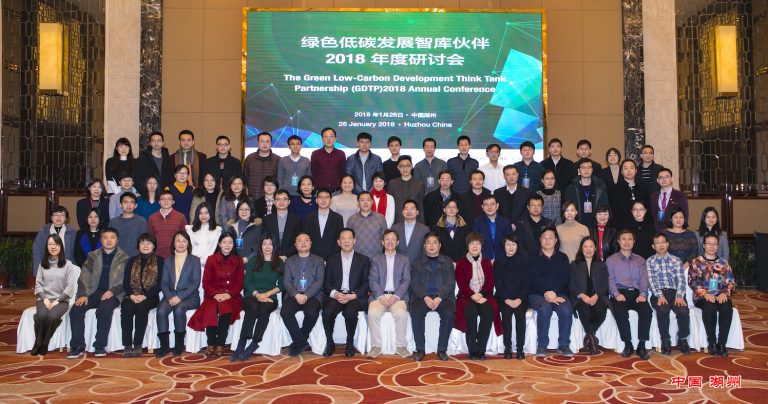
The GDTP 2020 Annual Conference was successfully held in Shanghai on October 30, 2020. The conference was organized by the Energy Systems Engineering Specialized Committee of the China Energy Research Society and co-organized by the Center for Energy Economics and Strategy Studies at Fudan University, the Secretariat of the Green and Low-carbon Development Think Tank Partnership (GDTP), and the Institute for Global Decarbonization Progress (iGDP), supported by the Energy Foundation.
The opening session was moderated by Zhang Xiliang, Chair of the Energy Systems Engineering Specialized Committee of the China Energy Research Society and Director of the Institute for Energy, Environment and Economy at Tsinghua University.

Zhang Xiliang, Chair of the Energy Systems Engineering Specialized Committee of the China Energy Research Society and Director of the Institute for Energy, Environment and Economy at Tsinghua University
The Communiqué of the Fifth Plenary Session of the 19th Central Committee of the Communist Party of China was released on the eve of the conference, reviewed and approved the Recommendations of the Central Committee of the Communist Party of China on Formulating the 14th Five-Year Plan for National Economic and Social Development and the Long-Range Objectives for 2035. The conference was held at a critical juncture, attracting more than 150 participants from Shanghai, Beijing, Chongqing, Tianjin, Sichuan, Guangdong, Hubei, Zhejiang, Shandong, Liaoning, Hainan, Inner Mongolia and other regions. Under the theme of “Focusing on the 14th Five-Year Plan and Looking Ahead to a Carbon-Neutral Future,” experts interpreted the spirit of the Fifth Plenary Session of the 19th CPC Central Committee and discussed carbon target setting under the 14th Five-Year Plan, potential pathways for deep emission reductions across regions in China, and market and policy instruments to promote green development. The full-day conference attracted nearly 10,000 online viewers.

He Jiankun, Deputy Director of the National Expert Committee on Climate Change, former Executive Vice President of Tsinghua University, and Senior Advisor of GDTP, provided an in-depth explanation of research findings on China’s long-term low-carbon development strategies and transition pathways.
He emphasized that achieving the long-term carbon neutrality goal requires substantial efforts from all countries, with developing countries facing greater challenges. China’s goal of achieving carbon neutrality by 2060 requires greater efforts compared with developed countries’ goal of achieving carbon neutrality by 2050.

Zhou Dadi, Executive Vice Chairman of the China Energy Research Society, Member of the National Expert Committee for the 14th Five-Year Plan, Deputy Director of the National Energy Planning Expert Committee for the 14th Five-Year Plan, Member of the National Expert Committee on Climate Change, and Senior Advisor of GDTP, analyzed the prospects for zero-carbon energy transition.
He pointed out that during the 14th Five-Year Plan period, China needs to identify the direction of low-carbon transition, take significant steps forward, and consider enabling half of China’s provinces and municipalities to reach their carbon emissions peaks during the 14th Five-Year Plan period.

Zou Ji, Chief Executive Officer and President of the Energy Foundation China, described a new growth narrative centered on green and low-carbon natural capital under the vision of carbon neutrality.
He stated that the Fifth Plenary Session of the 19th CPC Central Committee proposed achieving a steady decline after peaking. The priority is to create favorable conditions for this stable transition, prevent emission rebound and carbon lock-in effects, reduce stranded costs, move onto a faster pathway of emission reductions as early as possible, and reduce the overall social costs of mitigation through faster and more stable actions.

Ma Aimin, Deputy Director of the National Center for Climate Change Strategy and International Cooperation of the Ministry of Ecology and Environment, reviewed in detail the evolution of China’s climate change policies since the 11th Five-Year Plan period and provided an outlook for national climate change policies during the 14th Five-Year Plan period.
He emphasized that climate change response during the 14th Five-Year Plan period should become mainstreamed and reflect the requirement of fully meeting China’s Nationally Determined Contribution (NDC).

Zhao Daiqing, Researcher at Guangzhou Institute of Energy Conversion, Chinese Academy of Sciences, shared research findings on the vision and targets for carbon emission reduction in the Guangdong-Hong Kong-Macao Greater Bay Area during the 14th Five-Year Plan period.


From left to right: Hu Min, Chen Mingyang, Wu Libo, Zhao Daiqing, Wang Xuemei, and Teng Fei.


Fu Sha, Director of Strategic Planning and Low-carbon Transition Programs at the Energy Foundation, and Wang Zhigao, Director of the Low-carbon Cities Program at the Energy Foundation, respectively moderated the parallel sessions on “Carbon Targets under the 14th Five-Year Plan” and “Regional Pathways for Deep Emission Reduction.” Liu Jia, Director of the Green Development Research Center of Shanghai Economic and Information Center; Chen Caocao, Researcher at Beijing Climate Change Research Center; Wu Leya, Director of the Climate Change Response Research Center of Hainan Academy of Environmental Sciences; and Wei Danqing from Zhejiang Economic Information Center shared perspectives on regional 14th Five-Year Plan strategies and pathways for deep emission reductions.Hu Min, Director of the Institute for Global Decarbonization Progress (iGDP), shared research on integrating carbon emission reduction in the real economy with green finance. Yang Fuqiang, Senior Advisor at the Natural Resources Defense Council, introduced how total fossil energy consumption control can contribute to achieving the carbon neutrality goal.


Carbon markets have been a recurring topic of discussion at GDTP annual conferences. Against the backdrop of the European Union’s proposal of a carbon border adjustment mechanism and the joint issuance of the Guiding Opinions on Promoting Investment and Financing in Response to Climate Change by multiple Chinese government departments, Qi Shaozhou, Director of the Center for Climate Change and Energy Economics at Wuhan University; Duan Maosheng, Director of the China Carbon Market Research Center at Tsinghua University; Li Jin, Assistant General Manager of Shanghai Environment and Energy Exchange; and Zeng Xuelan, Director of Guangdong Climate Change Research Center at Sun Yat-sen University, conducted an in-depth discussion on institutional design, price discovery mechanisms, data management and other issues related to the development of the national carbon market.
Zhou Qiang, Deputy Director of the Shanghai Municipal Development and Reform Commission, attended the conference working dinner and exchanged views with participating experts.In 2021, the GDTP Annual Conference will move to Guangzhou and be organized by the Guangzhou Institute of Energy Conversion, Chinese Academy of Sciences.
Click the link to access the conference materials:
- He Jiankun: Research on China’s Long-Term Low-Carbon Development Strategy
- Zhou Dadi: Prospects for the Transition Toward Zero-Carbon Energy
- Zou Ji: Creating a New Growth Story of Green and Low-Carbon Development under the Carbon Neutrality Framework
- Zhao Daiqing: Research on the Vision and Goals for Carbon Peaking in the Guangdong-Hong Kong-Macao Greater Bay Area during the 14th Five-Year Plan Period
- Wu Libo: Climate Governance Driven by Big Data
- Chen Caocao: Deep Emission Reduction Pathways for Beijing
- Wei Danqing: Prospects for Regional Deep Emission Reduction Pathways under New Circumstances: A Case Study of Zhejiang Province
- Duan Maosheng: Evaluation of the Effectiveness of Carbon Emissions Trading Pilots and Implications for the Development of the National Carbon Market
- Zeng Xuelan: Data Quality Challenges in the Carbon Market
Please visit Expert Insights to read the experts’ insightful remarks delivered at the conference.