

Zero-Carbon Park Development
From Local Exploration to Nationwide Systematic Planning
Chinese
Dec 2025
Working Paper
CCNT Industry Subnational Climate Action
Summary:
This working paper examines the development of zero-carbon parks in China, analyzing the transition from fragmented local experimentation to nationally coordinated planning. It reviews the policy landscape and standard-setting landscape, categorizing standards into three types (group standards, local standards, and provincial action plans). It then identifies three differentiated regional development models based on analysis of 80 zero-carbon park pilots across eight provinces: emerging industry-driven (eastern coastal regions), clean energy-driven (southwestern regions), and energy transition-driven (central regions). The analysis also synthesizes the multi-dimensional characteristics of park development—energy, industry, transport, buildings, ecology, resource cycling, carbon management, and carbon sinks—and discusses the implications of the July 2025 national policy that formalized zero-carbon park development at the central government level.
Suggested citation:
Liu Jingning & Yang Peng. (2025). Zero-Carbon Park Development: From Local Exploration to Nationwide Systematic Planning (Working Paper). Beijing: Institute for Global Decarbonization Progress (iGDP). December 2025.
Related
-
ccnt weekly 测试weeklyFactsheet SEP 2026
-
同步测试8Academic Journal Article SEP 2026
-
同步测试5Insight SEP 2026
-
Decarbonizing Steel Industry Thermal SystemsThis report examines the low-carbon transition pathways for thermal/heating systems in China's steel industry, reviewing the policy drivers behind decarbonization and analyzing the technological trajectory across near-, medium-, and long-term horizons (2025–2060). It surveys and compares the applicability, economics, and emissions-reduction potential of key technologies—including waste heat recovery, system efficiency improvements, and hydrogen-based metallurgy—through in-depth case studies (HBIS Group's hydrogen metallurgy, Shougang Jingtang's process interface optimization, and Sinosteel/CISP's hydrogen-based smelting reduction, among others). It further identifies the practical barriers to scaling these technologies (high green hydrogen costs, renewable energy intermittency, stranded-asset risk, and weak cross-sector coordination mechanisms), and proposes policy recommendations to accelerate the sector's shift toward integration with renewable energy systems.Report AUG 2026
-
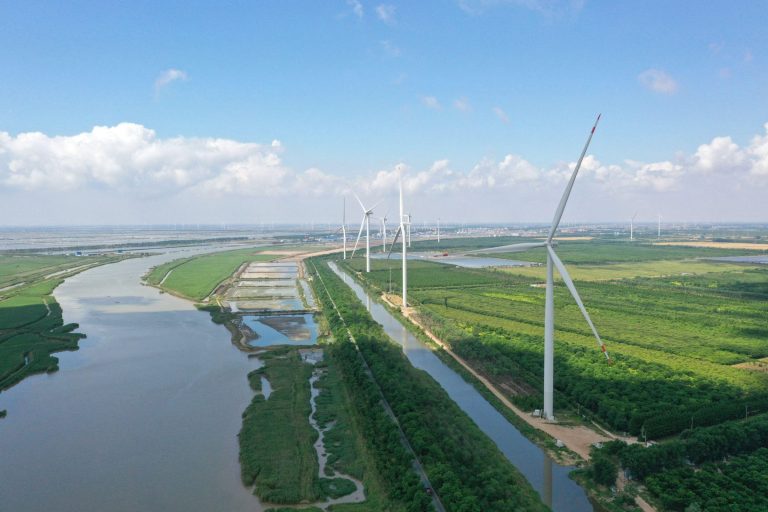
Can China’s zero-carbon industrial parks go global?In March 2026, China’s 15th Five Year Plan set a target to build “around 100 national level zero-carbon industrial parks” – zones for industrial production with net-zero or close to zero carbon emissions. It marked an upgrade to what had previously been a series of pilot projects around the country and catapulted such zones to a national priority.Interview JUL 2026
-
In-Depth: China’s New Energy Sector Moves Beyond “Scale Worship”On July 23, the National Development and Reform Commission and the National Energy Administration released the “15th Five-Year Plan for Renewable Energy Development” (hereinafter referred to as the “Plan”), which sets out a systematic roadmap for the development of renewable energy over the next five years.Interview JUL 2026